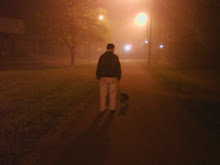
To wait for moments or places where no pain exists, no separation is felt and where all human restlessness has turned into inner peace is waiting for a dreamworld.
Henri Nouwen, Reaching Out (19)
There is no trauma-free world, no trauma-free space in real life…. Life is traumatizing. Trauma hits and keeps on hitting. It is part of who we are. Our very personalities have self-traumatizing aspects.
Michael Eigen, Conversations with Michael Eigen (116, 131)
An inescapable sadness is part of the life of any reflective person, but it is only part – by no means all – of living.
Bruno Bettelheim, Freud and Man’s Soul (111)
In recent years, I have come to see more fully the tragic aspects of life – its difficulties, struggles, pain, how intertwined joy and sorrow are in life. Maybe it comes with nearing age 50, which I will reach in about a month. Maybe it comes with living – with experiencing disappointment, with on-going struggles within, with recognizing how agonizingly slow some needed change occurs in the world. Not long ago I was jotting down adjectives to describe some of the range of human experience, adjectives I would guess encompass something of the experience of many human beings: deep disappointment, extravagant ecstasy, heart-wrenching sorrow, heart-warming joy, sheer boredom, tediousness, merely miserable, crushing anguish, soul-stirring hope, live-giving love. The realization that has come with age is that we continue to know the wide-range of experiences. The difficult experiences don’t vanish.
So what do we do with all that? I have just begun reading Huston Smith’s recently published autobiography Tales of Wonder. Thus far it is a delight. He shares how he first met Aldous Huxley and how later he invited him to lecture at MIT. Huxley drew a large crowd, but confessed to Smith, “It’s rather embarrassing to have given one’s entire life to pondering the human predicament and to find that in the end one has little more to say than Try to be a little kinder.” (46-47) Huxley was on to something. Jesus invited us to love. Paul wrote that among the fruits of the Spirit is kindness. Knowing life can be hurtful, traumatic, painful, disappointing as well as joyful, loving, hopeful makes me want to cultivate kindness and compassion. Somehow the life-long journey, sometimes struggle, to develop a compassionate heart, a deep soul, a kind spirit, a capacious mind seems worth it. If there is no trauma-free space in real life, "try to be a little kinder" seems good advice.
And so I seek to give birth to this person who can be kind and gentle and caring and loving and wise - seek to be transformed again and again by the Spirit of God into this kind of person.
What is keeping you from… living your life as though it were one painful beautiful day in the history of a great pregnancy? (Rilke, Letters to a Young Poet, sixth letter)
With Faith and With Feathers,
David
Friday, May 22, 2009

Tuesday, May 12, 2009
Baseball
We are about a month into the 2009 baseball season. The Minnesota Twins are two games under .500 and three games out of the American League Central lead. Thus far, inconsistency in their pitching, starting pitching and relief pitching, seems to be the biggest problem. Still, they have been fun to watch and I watch a few innings when I can.
I am not sure what it is about baseball that draws me. Some find the game absolutely boring, but where they find boring I find an unforced rhythm of grace (stealing a phrase from Eugene Peterson’s translation of Matthew 11). I know many of the interesting comparisons between baseball and life – the fine balance between team and individual, getting a hit 4 times out of ten makes you a huge success, and some of the songs sung about baseball’s uniqueness – the obscure statistics, the only game played without a clock. There is something in all of this that attracts me to the game. More than that, however, there is in baseball a deep connection to my childhood and youth. Unless one’s childhood is completely marred by family violence and dysfunction, by poverty, by violence in the society in which one lives, there are probably some deep, loving connections with that time in our life that continue to tug at our souls. Baseball seems one of those for me. One great tragedy about family violence and dysfunction, grinding poverty, war-torn nations and violent neighborhoods is the lasting scars left on children, the loss to their souls.
I began collecting baseball cards when I was in grade school. I loved listening to the games on the radio. Baseball is a great game for radio, which may be why it is not as popular as it once was. Baseball is a game you can listen too when you cannot watch. I alphabetized my cards by teams, wrote up rosters for each team and played games with my cards. I was horrified by the barbarians who used their baseball cards to help their bicycles make noise – clipping a card onto part of the fender with a clothespin so the card caught in the bike spokes and made a quick tich-tich-tich sound. The only cards that should be used for such purposes were the checklists. Not even the most inept player for the Montreal Expos deserved such treatment.
Baseball was a game you could read about, too. One of the earliest purchased books in my personal library is a thin volume called “The Greatest in Baseball.” I probably bought it in the second grade, maybe third. My life-long love for reading has roots in my love of baseball. Thankfully my reading skills developed beyond my baseball skills.
John Updike, who died earlier this year, is one of the authors whose books line my shelves, rather like my baseball cards stacked in boxes – alphabetized by team and banded together. Updike was such a prolific author that two posthumous books are out within six months of his death – a book of poems last month and a book of stories in June. In the book of poems (Endpoint), one finds a poem entitled “Baseball.” Here is the first stanza:
It looks easy from a distance,
easy and lazy, even,
until you stand up to the plate
and see the fastball sailing inside,
an inch from your chin,
or circle in the outfield
straining to get a bead
on a small black dot
a city block or more high,
a dark star that could fall
on your head like a leaden meteor.
Much earlier in his writing career, Updike wrote a famous essay “Hub Fans Bid Kid Adieu” about Ted Williams last game and “the affair between Boston and Ted Williams… a marriage composed of spats, mutual disappointments, and, toward the end, a mellowing hoard of shared memories.” Ever the word lover, Updike uses a strange noun in a footnote – Schlagballewusstein, which he renders baseball-consciousness. Updike’s Schlagballewusstein was a long-lived one. He writes in the Williams essay about following box scores as a boy in Pennsylvania, and his poem in Endpoint testifies to his interest in baseball to the end. Updike’s interests certainly spanned well beyond baseball, but baseball-consciousness remained a part of his self-consciousness for life. Maybe for him, too, baseball touched a part of the soul that belonged to the child.
“Baseball is a game of the long season,” Updike wrote in his essay. In that way, too, it is like life. In the long season of life, baseball and good books make wonderful companions.
With Faith and With Feathers,
David
My one moment on a major league field, 2004, throwing out a first pitch at a Twins Game

I am not sure what it is about baseball that draws me. Some find the game absolutely boring, but where they find boring I find an unforced rhythm of grace (stealing a phrase from Eugene Peterson’s translation of Matthew 11). I know many of the interesting comparisons between baseball and life – the fine balance between team and individual, getting a hit 4 times out of ten makes you a huge success, and some of the songs sung about baseball’s uniqueness – the obscure statistics, the only game played without a clock. There is something in all of this that attracts me to the game. More than that, however, there is in baseball a deep connection to my childhood and youth. Unless one’s childhood is completely marred by family violence and dysfunction, by poverty, by violence in the society in which one lives, there are probably some deep, loving connections with that time in our life that continue to tug at our souls. Baseball seems one of those for me. One great tragedy about family violence and dysfunction, grinding poverty, war-torn nations and violent neighborhoods is the lasting scars left on children, the loss to their souls.
I began collecting baseball cards when I was in grade school. I loved listening to the games on the radio. Baseball is a great game for radio, which may be why it is not as popular as it once was. Baseball is a game you can listen too when you cannot watch. I alphabetized my cards by teams, wrote up rosters for each team and played games with my cards. I was horrified by the barbarians who used their baseball cards to help their bicycles make noise – clipping a card onto part of the fender with a clothespin so the card caught in the bike spokes and made a quick tich-tich-tich sound. The only cards that should be used for such purposes were the checklists. Not even the most inept player for the Montreal Expos deserved such treatment.
Baseball was a game you could read about, too. One of the earliest purchased books in my personal library is a thin volume called “The Greatest in Baseball.” I probably bought it in the second grade, maybe third. My life-long love for reading has roots in my love of baseball. Thankfully my reading skills developed beyond my baseball skills.
John Updike, who died earlier this year, is one of the authors whose books line my shelves, rather like my baseball cards stacked in boxes – alphabetized by team and banded together. Updike was such a prolific author that two posthumous books are out within six months of his death – a book of poems last month and a book of stories in June. In the book of poems (Endpoint), one finds a poem entitled “Baseball.” Here is the first stanza:
It looks easy from a distance,
easy and lazy, even,
until you stand up to the plate
and see the fastball sailing inside,
an inch from your chin,
or circle in the outfield
straining to get a bead
on a small black dot
a city block or more high,
a dark star that could fall
on your head like a leaden meteor.
Much earlier in his writing career, Updike wrote a famous essay “Hub Fans Bid Kid Adieu” about Ted Williams last game and “the affair between Boston and Ted Williams… a marriage composed of spats, mutual disappointments, and, toward the end, a mellowing hoard of shared memories.” Ever the word lover, Updike uses a strange noun in a footnote – Schlagballewusstein, which he renders baseball-consciousness. Updike’s Schlagballewusstein was a long-lived one. He writes in the Williams essay about following box scores as a boy in Pennsylvania, and his poem in Endpoint testifies to his interest in baseball to the end. Updike’s interests certainly spanned well beyond baseball, but baseball-consciousness remained a part of his self-consciousness for life. Maybe for him, too, baseball touched a part of the soul that belonged to the child.
“Baseball is a game of the long season,” Updike wrote in his essay. In that way, too, it is like life. In the long season of life, baseball and good books make wonderful companions.
With Faith and With Feathers,
David
My one moment on a major league field, 2004, throwing out a first pitch at a Twins Game

Monday, May 4, 2009
Labyrinth
While busy, this past week was also rich. Wednesday and Thursday I attended the Spring Convocation at United Theological Seminary of the Twin Cities, my seminary alma mater. I enjoyed seeing some former classmates, former teachers and other old friends and colleagues. The topic for the convocation was worship and Marty Haugen, a well-known and well-respected hymn writer, was a major presenter. I am still processing all that I took in over these couple of days.
One reason that I continue to process what I heard at UTS-TC was that I arrived home on Thursday afternoon and left Friday morning to be a leader at the Spring Spiritual Renewal Retreat for The United Methodist Women of Minnesota. I was warmly welcomed by the participants of this conference. They listened deeply as I shared insights on living the Sacred as Christians, and they offered probing and intelligent comments and questions. “Living the Sacred” was the retreat topic and I shared thoughts about “the Sacred” and about Christian spiritual practices using Scripture, poetry, stories and my own experience. One of the messages I wanted to convey is that whatever helps us get in touch with the God we know in Jesus Christ more deeply, and shapes our lives in the direction of love more profoundly, can be a spiritual discipline, can be a part of living the Sacred.
The women welcomed me not only as a presenter but also as a participant in the retreat, and their hospitality was gracious.
One retreat activity was walking the labyrinth by candle light. I have walked the labyrinth before and have always found it a meaningful exercise in spirituality. I have never before walked it by candlelight, or with such a large group. There were lessons to be learned that evening, new encounters with the Sacred to be made.
My first lesson for the evening came as I waited to enter the labyrinth. As my turn came near, I began to get a feeling of excitement and anticipation in the pit of my stomach. It reminded me of standing in line at Valley Fair and being next in line for the ride. Living the Sacred can be a wild ride sometimes - - - allowing oneself to be blown by the winds of the Spirit, dancing on those winds.
Lesson number two hit a couple of times during the walk. It arrived first in the form of a small kink in my back muscles – not overpowering but a little uncomfortable. Then hot wax from the candle I was holding dripped down through the paper and stung my hand as it hit it, before reforming a wax surface on a finger. The spiritual life is not pain free. The promise in living the Sacred is not an easy, pain-free life. In fact, when you choose to love, you open yourself to the possibility of more pain, because those you love may hurt or hurt you (think Roy Orbison, “Love Hurts”). The world you love will disappoint. The promise of the spiritual life is not a pain-free life, but fullness of life, a transformed life, a life where joy emerges even in difficult circumstances.
The third lesson arrived when I arrived for the second time in the center of the labyrinth. That’s not supposed to happen. I could tell myself that I messed up – “how do you screw up a labyrinth.” There is a part of me that goes there pretty quickly, being a perfectionist of sorts. But when I got to the center the second time, I laughed and was reminded that there is no single way to live the Sacred. You cannot screw up a labyrinth.
Finally, we get by with a little help from our friends (yes, there is a Beatles song!). The spiritual life is not intended to be lived alone, but in community. Most of us walking the labyrinth needed to be handed a second candle – I needed three! When I finished walking, though no instructions were given about this, I felt I wanted to stay and stand with those still walking – holding my candle as long as I could. I was early into the labyrinth, and others held their candles for me, I wanted to do the same. And when my third candle burned out, I still stayed.
Walking the labyrinth is a traditional discipline for living the Sacred, but like many encounters with the Sacred, one never knows just what the lessons might be this time around.
With Faith and With Feathers,
David
One reason that I continue to process what I heard at UTS-TC was that I arrived home on Thursday afternoon and left Friday morning to be a leader at the Spring Spiritual Renewal Retreat for The United Methodist Women of Minnesota. I was warmly welcomed by the participants of this conference. They listened deeply as I shared insights on living the Sacred as Christians, and they offered probing and intelligent comments and questions. “Living the Sacred” was the retreat topic and I shared thoughts about “the Sacred” and about Christian spiritual practices using Scripture, poetry, stories and my own experience. One of the messages I wanted to convey is that whatever helps us get in touch with the God we know in Jesus Christ more deeply, and shapes our lives in the direction of love more profoundly, can be a spiritual discipline, can be a part of living the Sacred.
The women welcomed me not only as a presenter but also as a participant in the retreat, and their hospitality was gracious.
One retreat activity was walking the labyrinth by candle light. I have walked the labyrinth before and have always found it a meaningful exercise in spirituality. I have never before walked it by candlelight, or with such a large group. There were lessons to be learned that evening, new encounters with the Sacred to be made.
My first lesson for the evening came as I waited to enter the labyrinth. As my turn came near, I began to get a feeling of excitement and anticipation in the pit of my stomach. It reminded me of standing in line at Valley Fair and being next in line for the ride. Living the Sacred can be a wild ride sometimes - - - allowing oneself to be blown by the winds of the Spirit, dancing on those winds.
Lesson number two hit a couple of times during the walk. It arrived first in the form of a small kink in my back muscles – not overpowering but a little uncomfortable. Then hot wax from the candle I was holding dripped down through the paper and stung my hand as it hit it, before reforming a wax surface on a finger. The spiritual life is not pain free. The promise in living the Sacred is not an easy, pain-free life. In fact, when you choose to love, you open yourself to the possibility of more pain, because those you love may hurt or hurt you (think Roy Orbison, “Love Hurts”). The world you love will disappoint. The promise of the spiritual life is not a pain-free life, but fullness of life, a transformed life, a life where joy emerges even in difficult circumstances.
The third lesson arrived when I arrived for the second time in the center of the labyrinth. That’s not supposed to happen. I could tell myself that I messed up – “how do you screw up a labyrinth.” There is a part of me that goes there pretty quickly, being a perfectionist of sorts. But when I got to the center the second time, I laughed and was reminded that there is no single way to live the Sacred. You cannot screw up a labyrinth.
Finally, we get by with a little help from our friends (yes, there is a Beatles song!). The spiritual life is not intended to be lived alone, but in community. Most of us walking the labyrinth needed to be handed a second candle – I needed three! When I finished walking, though no instructions were given about this, I felt I wanted to stay and stand with those still walking – holding my candle as long as I could. I was early into the labyrinth, and others held their candles for me, I wanted to do the same. And when my third candle burned out, I still stayed.
Walking the labyrinth is a traditional discipline for living the Sacred, but like many encounters with the Sacred, one never knows just what the lessons might be this time around.
With Faith and With Feathers,
David
Sunday, April 26, 2009
Thoughts Worth Sharing
Here are two quotes encountered this week that are worth sharing.
People travel to wonder at the height of the mountains, at the huge waves of the seas, at the long course of rivers, at the vast compass of the ocean, at the circular motion of the stars, and yet they pass by themselves without wondering.
St. Augustine
I have sometimes dreamt... that when the Day of Judgment dawns and the great conquerors and lawyers and statesmen come to receive their rewards - their crowns, their laurels, their names carved indelibly upon imperishable marble - the Almighty will turn to Peter and will say, not without a certain envy when He sees us coming with our books under our arms, "Look, these need no reward. We have nothing to give them here. They have loved reading."
Virginia Woolf, How Should One Read a Book?
For me, I have often been left wondering at the mystery of myself precisely when reading.
With Faith and With Feathers,
David
People travel to wonder at the height of the mountains, at the huge waves of the seas, at the long course of rivers, at the vast compass of the ocean, at the circular motion of the stars, and yet they pass by themselves without wondering.
St. Augustine
I have sometimes dreamt... that when the Day of Judgment dawns and the great conquerors and lawyers and statesmen come to receive their rewards - their crowns, their laurels, their names carved indelibly upon imperishable marble - the Almighty will turn to Peter and will say, not without a certain envy when He sees us coming with our books under our arms, "Look, these need no reward. We have nothing to give them here. They have loved reading."
Virginia Woolf, How Should One Read a Book?
For me, I have often been left wondering at the mystery of myself precisely when reading.
With Faith and With Feathers,
David
Monday, April 20, 2009
We Can Do Better
Today marks the tenth anniversary of the tragedy at Columbine High School in Littleton, Colorado. It is difficult to believe that has been ten years since two seniors at Columbine unleashed an attack with guns and pipe bombs at their school.
The gunmen, Eric Harris, 18, and Dylan Klebold, 17, committed suicide as their violent rampage ended.
Locally, the Million Mom March held a candlelight vigil to remember all the victims of gun violence, including those at Columbine. I was asked to be one of the speakers for the evening, and I gladly said, "yes." The following are my remarks.
Since being asked to speak here on this tenth anniversary of the shootings at Columbine High School, we have had to add to our list new place names which mark death from tragic gun violence in our consciousness as Americans: Samson, Alabama; Washington State; Pittsburgh; Oakland; Binghamton, New York. On April 8 an editorial in The New York Times noted that there had been 57 deaths in mass shootings in the past month. The toll continues to rise as last Thursday in Long Beach, California a gunman, a hospital employee, entered the Long Beach Memorial Medical Center shot and killed two workers before taking his own life. As we gather tonight our hearts are justifiably heavy. We feel the effects of this violence, these deaths. We grieve, and for those who have lost loved ones to gun violence, new incidents tear at the scars of previously felt grief. Our sense of security is made more precarious.
Into the heaviness of this evening, let me share a story from my faith tradition, a story that will initially leave us feeling even heavier. Cain rose up against his brother Abel and killed him. Then the Lord said to Cain, “Where is your brother Abel?” He said, “I do not know; am I my brother’s keeper?” (Genesis 4:8b-9) Just two chapters after the beginnings of humanity comes this story. The placement of the story suggests that early in the human enterprise there is violence and killing. In her book The Fall to Violence, theologian Marjorie Suchocki writes: As a species we present human beings all wear the mark of Cain… within our souls. We have evolved through a long history of violent death, and retain a continued penchant to inflict violence in life. Our birthmark is a common capacity for violence, an aggressiveness written deep within the structures of our being. (94)
As human beings we can be violent and aggressive and a part of what that means is that we cannot prevent every tragedy that occurs in the world. I wish this were not so. I wish I could wave a wand or sprinkle some magic powder and take tragedy out of the world, but I cannot, and we cannot together. We cannot prevent every Columbine, every Cold Spring, every Red Lake, every Virginia Tech, every Binghamton. Our grief and mourning are very real tonight, because we know others will gather in the future to grieve and mourn.
But the story from Genesis contains seeds of hope, hints at the possibility that while we may not rid the world of violence and tragedy entirely, the world can be different than it is. After being confronted with the fact that his brother is missing, Cain utters these remarkable words: “Am I my brother’s keeper?” In the context of the story, the clear answer is “Yes!” As human beings we may have capacities for aggressiveness and violence, we also have capacities to be in community with each other, to see ourselves as our sister’s keeper, our brother’s keeper.
That wonderfully evocative notion of being our brother’s keeper, our sister’s keeper, opens up to a more expansive vision for human life, a vision that, in the words of theologian Marjorie Suchocki, bespeaks the beauty of reciprocal well-being, of justice, of love without boundaries. It bespeaks a vision of no less that the community of God. This vision calls us to recognize who we are individually and communally; and to live toward the hope of transformation. (160) As human beings we cannot, we must not simply shrug our shoulders in the face of violence and tragedy, even knowing that we cannot prevent it all. We must also know that we are our brother’s keeper, our sister’s keeper, that we can work together for a world that evidences reciprocal well-being, justice, love without boundaries. We can live toward the hope of transformation.
We may not be able to prevent every tragedy in our world, every violent death, but we can do better.
In a country where almost 600,000 people were murdered between 1976 and 2005 – about 70% by guns, where our murder rate is three times that of Canada or the United Kingdom and five times that of Germany, we can do better. We can live toward the hope of transformation.
In a world where there will be some violence, we can lessen the violence and lessen its murderous impact by limiting the means for acting out aggressiveness and violence. Rage is one thing – rage with an assault weapon that keeps firing once the trigger is pulled is another. Gun ownership is a right guaranteed by our Constitution, but the courts have also provided for reasonable restrictions of that right for the public safety and the public good. What could be more reasonable than to ask that all sales be subject to a background check, to screen out those who seem to have difficulty managing their aggressiveness? We can do better. We can live toward the hope of transformation.
In a world where there will be pain, we can lessen the pain and grief of victims and families and communities by minimizing the number of violent deaths through modest and reasonable means. We have mutual responsibilities for each other’s well-being. We affirm our communal bonds when we look beyond our own wants, our own preferences, our own rights, and look as well to the good of the community. We can do better. We can live toward the hope of transformation.
In a world where there will be some fear, we can lessen fear and anxiety by enhancing our sense of community. Let’s affirm that we are our brother’s keeper. We are our sister’s keeper. Some of the provisions in our laws which makes access to weapons that kill and maim possible for those who should not have such access are not simply legal loopholes, but are holes torn in the fabric of our common life, and when that fabric is torn we all feel less safe, more alone, more fearful. We can do better. We can live toward the hope of transformation.
As I wrap up my remarks, allow me again to turn to my faith tradition, this time to the Book of Proverbs. Wisdom cries out in the street; in the squares she raises her voice. At the busiest corner she cries out; at the entrance of the city gates she speaks (1:20-21)
Wisdom still calls to us – cries out from our blood-stained streets and bullet-marked city squares. Wisdom calls to us, reminding us that we are our brother’s keeper, we are our sister’s keeper. Wisdom calls to us – we can do better. As we remember victims, as we mourn, may we hear wisdom’s voice telling us we can do better, reminding us to live toward the hope of transformation.
For speaking at this event, the organizers from the Million Mom March presented me with an apple pie and as I eat it I hope for the day when gun violence will no longer seem as American as apple pie.
With Faith and With Feathers,
David
The gunmen, Eric Harris, 18, and Dylan Klebold, 17, committed suicide as their violent rampage ended.
Locally, the Million Mom March held a candlelight vigil to remember all the victims of gun violence, including those at Columbine. I was asked to be one of the speakers for the evening, and I gladly said, "yes." The following are my remarks.
Since being asked to speak here on this tenth anniversary of the shootings at Columbine High School, we have had to add to our list new place names which mark death from tragic gun violence in our consciousness as Americans: Samson, Alabama; Washington State; Pittsburgh; Oakland; Binghamton, New York. On April 8 an editorial in The New York Times noted that there had been 57 deaths in mass shootings in the past month. The toll continues to rise as last Thursday in Long Beach, California a gunman, a hospital employee, entered the Long Beach Memorial Medical Center shot and killed two workers before taking his own life. As we gather tonight our hearts are justifiably heavy. We feel the effects of this violence, these deaths. We grieve, and for those who have lost loved ones to gun violence, new incidents tear at the scars of previously felt grief. Our sense of security is made more precarious.
Into the heaviness of this evening, let me share a story from my faith tradition, a story that will initially leave us feeling even heavier. Cain rose up against his brother Abel and killed him. Then the Lord said to Cain, “Where is your brother Abel?” He said, “I do not know; am I my brother’s keeper?” (Genesis 4:8b-9) Just two chapters after the beginnings of humanity comes this story. The placement of the story suggests that early in the human enterprise there is violence and killing. In her book The Fall to Violence, theologian Marjorie Suchocki writes: As a species we present human beings all wear the mark of Cain… within our souls. We have evolved through a long history of violent death, and retain a continued penchant to inflict violence in life. Our birthmark is a common capacity for violence, an aggressiveness written deep within the structures of our being. (94)
As human beings we can be violent and aggressive and a part of what that means is that we cannot prevent every tragedy that occurs in the world. I wish this were not so. I wish I could wave a wand or sprinkle some magic powder and take tragedy out of the world, but I cannot, and we cannot together. We cannot prevent every Columbine, every Cold Spring, every Red Lake, every Virginia Tech, every Binghamton. Our grief and mourning are very real tonight, because we know others will gather in the future to grieve and mourn.
But the story from Genesis contains seeds of hope, hints at the possibility that while we may not rid the world of violence and tragedy entirely, the world can be different than it is. After being confronted with the fact that his brother is missing, Cain utters these remarkable words: “Am I my brother’s keeper?” In the context of the story, the clear answer is “Yes!” As human beings we may have capacities for aggressiveness and violence, we also have capacities to be in community with each other, to see ourselves as our sister’s keeper, our brother’s keeper.
That wonderfully evocative notion of being our brother’s keeper, our sister’s keeper, opens up to a more expansive vision for human life, a vision that, in the words of theologian Marjorie Suchocki, bespeaks the beauty of reciprocal well-being, of justice, of love without boundaries. It bespeaks a vision of no less that the community of God. This vision calls us to recognize who we are individually and communally; and to live toward the hope of transformation. (160) As human beings we cannot, we must not simply shrug our shoulders in the face of violence and tragedy, even knowing that we cannot prevent it all. We must also know that we are our brother’s keeper, our sister’s keeper, that we can work together for a world that evidences reciprocal well-being, justice, love without boundaries. We can live toward the hope of transformation.
We may not be able to prevent every tragedy in our world, every violent death, but we can do better.
In a country where almost 600,000 people were murdered between 1976 and 2005 – about 70% by guns, where our murder rate is three times that of Canada or the United Kingdom and five times that of Germany, we can do better. We can live toward the hope of transformation.
In a world where there will be some violence, we can lessen the violence and lessen its murderous impact by limiting the means for acting out aggressiveness and violence. Rage is one thing – rage with an assault weapon that keeps firing once the trigger is pulled is another. Gun ownership is a right guaranteed by our Constitution, but the courts have also provided for reasonable restrictions of that right for the public safety and the public good. What could be more reasonable than to ask that all sales be subject to a background check, to screen out those who seem to have difficulty managing their aggressiveness? We can do better. We can live toward the hope of transformation.
In a world where there will be pain, we can lessen the pain and grief of victims and families and communities by minimizing the number of violent deaths through modest and reasonable means. We have mutual responsibilities for each other’s well-being. We affirm our communal bonds when we look beyond our own wants, our own preferences, our own rights, and look as well to the good of the community. We can do better. We can live toward the hope of transformation.
In a world where there will be some fear, we can lessen fear and anxiety by enhancing our sense of community. Let’s affirm that we are our brother’s keeper. We are our sister’s keeper. Some of the provisions in our laws which makes access to weapons that kill and maim possible for those who should not have such access are not simply legal loopholes, but are holes torn in the fabric of our common life, and when that fabric is torn we all feel less safe, more alone, more fearful. We can do better. We can live toward the hope of transformation.
As I wrap up my remarks, allow me again to turn to my faith tradition, this time to the Book of Proverbs. Wisdom cries out in the street; in the squares she raises her voice. At the busiest corner she cries out; at the entrance of the city gates she speaks (1:20-21)
Wisdom still calls to us – cries out from our blood-stained streets and bullet-marked city squares. Wisdom calls to us, reminding us that we are our brother’s keeper, we are our sister’s keeper. Wisdom calls to us – we can do better. As we remember victims, as we mourn, may we hear wisdom’s voice telling us we can do better, reminding us to live toward the hope of transformation.
For speaking at this event, the organizers from the Million Mom March presented me with an apple pie and as I eat it I hope for the day when gun violence will no longer seem as American as apple pie.
With Faith and With Feathers,
David
Saturday, April 18, 2009
Leith Anderson and John Shelby Spong – probably not a combination usually seen together, but they came together in my life in the past month.
I have already written a bit here about Bishop Spong’s visit to Duluth for a conference on including GLBT persons in the church. I noted that I appreciated his visit, agree with him on a number of issues and disagree with him on others. Bishop Spong recently reflected kindly on his visit to Duluth on his web site, even going so far as to “recommend that you visit Duluth in the winter.” His kind words extended to three of my colleague and myself – Rev. Kathy Nelson of Peace UCC, Rev. Bill Van Oss of St. Paul’s Episcopal Church, and Rabbi Amy Bernstein of Temple Israel. “I found it almost inconceivable that a town the size of Duluth, and regarded as somewhat outside the mainstream of American life in its remote and rural setting, had nonetheless attracted to itself these four outstanding clergy.” What a nice thing to say, and an honor for me to be in the company of Kathy, Bill, and Amy. I still disagree with Bishop Spong on God, though.
I had the opportunity to hear Leith Anderson when he came to speak to the Northland Association of Evangelicals in the Duluth-Superior area. Mainline clergy were invited by a treasured colleague, Rev. Fred Lund, who continues to work to bring together evangelicals and mainline Protestants in our area. Fred is an evangelical pastor who has worked tirelessly for justice in our community. His retirement this year from his church will leave big shoes to fill. Anyway, Fred invited and I took him up on the invitation. He was kind enough to introduce me to Leith, who is both President of the National Association of Evangelicals and senior pastor of Wooddale Church in Eden Prairie, Minnesota, near Minneapolis. I enjoyed my brief one-on-one conversation with Leith, finding him gracious and engaging.
Leith gave an insightful and informative presentation on the future of evangelicals in the twenty-first century, providing in his remarks a brief history of evangelicalism in The United States. During his presentation, he said he defined an evangelical as someone “who takes the Bible seriously and who accepts Jesus Christ as Lord and Savior.” I am an evangelical, then. What would Bishop Spong say? What seems to happen, though, is that taking the Bible seriously gets further defined in ways I disagree with. Both the Northland Association of Evangelicals and the National Association of Evangelicals say that the Bible is “the inspired, the only infallible, authoritative Word of God.” I believe the Bible is inspired and authoritative for Christian life. I use the term “word of God” to define the Bible, but my Christian faith tells me that only Jesus as the Christ really deserves the capital “Word of God.” I also believe that the word “infallible” takes the Bible more “seriously” than it takes itself. Of my two new acquaintances, I believe Bishop Spong is probably breathing easier now, but Leith is a little more concerned.
The statement of faith on both the Evangelical Association web sites also suggests that Jesus Christ is not only Lord and Savior, but that without affirming that people are lost and thus subject to the “resurrection of damnation.” I affirm Jesus Christ as Lord and Savior, as the one in whom and through whom I see God and know God, and the one whose Spirit shapes my life in transforming and saving ways. I would also argue that the God I know in Jesus Christ might also touch human lives in saving and transforming ways through other religious traditions. I have just made myself ineligible for membership in my local and in the national Association of Evangelicals.
However, I was deeply encouraged that though Leith Anderson and I have theological differences, he strongly advocated dialogue with those who disagree. In his presentation he was clear that he believed Christians should exemplify Christ in dialogue, and even said, “if we don’t have discussion with those who are different we become a cult.” Leith Anderson signed the document “A Common Word,” a document inviting on-going Christian-Muslim dialogue. I deeply appreciated the openness and intelligence I heard that night. Thanks for the invitation, Fred.
So the conversations will continue, and I am glad that I now have these two delightful and intelligent conversation partners rattling around in my brain.
With Faith and With Feathers,
David
I have already written a bit here about Bishop Spong’s visit to Duluth for a conference on including GLBT persons in the church. I noted that I appreciated his visit, agree with him on a number of issues and disagree with him on others. Bishop Spong recently reflected kindly on his visit to Duluth on his web site, even going so far as to “recommend that you visit Duluth in the winter.” His kind words extended to three of my colleague and myself – Rev. Kathy Nelson of Peace UCC, Rev. Bill Van Oss of St. Paul’s Episcopal Church, and Rabbi Amy Bernstein of Temple Israel. “I found it almost inconceivable that a town the size of Duluth, and regarded as somewhat outside the mainstream of American life in its remote and rural setting, had nonetheless attracted to itself these four outstanding clergy.” What a nice thing to say, and an honor for me to be in the company of Kathy, Bill, and Amy. I still disagree with Bishop Spong on God, though.
I had the opportunity to hear Leith Anderson when he came to speak to the Northland Association of Evangelicals in the Duluth-Superior area. Mainline clergy were invited by a treasured colleague, Rev. Fred Lund, who continues to work to bring together evangelicals and mainline Protestants in our area. Fred is an evangelical pastor who has worked tirelessly for justice in our community. His retirement this year from his church will leave big shoes to fill. Anyway, Fred invited and I took him up on the invitation. He was kind enough to introduce me to Leith, who is both President of the National Association of Evangelicals and senior pastor of Wooddale Church in Eden Prairie, Minnesota, near Minneapolis. I enjoyed my brief one-on-one conversation with Leith, finding him gracious and engaging.
Leith gave an insightful and informative presentation on the future of evangelicals in the twenty-first century, providing in his remarks a brief history of evangelicalism in The United States. During his presentation, he said he defined an evangelical as someone “who takes the Bible seriously and who accepts Jesus Christ as Lord and Savior.” I am an evangelical, then. What would Bishop Spong say? What seems to happen, though, is that taking the Bible seriously gets further defined in ways I disagree with. Both the Northland Association of Evangelicals and the National Association of Evangelicals say that the Bible is “the inspired, the only infallible, authoritative Word of God.” I believe the Bible is inspired and authoritative for Christian life. I use the term “word of God” to define the Bible, but my Christian faith tells me that only Jesus as the Christ really deserves the capital “Word of God.” I also believe that the word “infallible” takes the Bible more “seriously” than it takes itself. Of my two new acquaintances, I believe Bishop Spong is probably breathing easier now, but Leith is a little more concerned.
The statement of faith on both the Evangelical Association web sites also suggests that Jesus Christ is not only Lord and Savior, but that without affirming that people are lost and thus subject to the “resurrection of damnation.” I affirm Jesus Christ as Lord and Savior, as the one in whom and through whom I see God and know God, and the one whose Spirit shapes my life in transforming and saving ways. I would also argue that the God I know in Jesus Christ might also touch human lives in saving and transforming ways through other religious traditions. I have just made myself ineligible for membership in my local and in the national Association of Evangelicals.
However, I was deeply encouraged that though Leith Anderson and I have theological differences, he strongly advocated dialogue with those who disagree. In his presentation he was clear that he believed Christians should exemplify Christ in dialogue, and even said, “if we don’t have discussion with those who are different we become a cult.” Leith Anderson signed the document “A Common Word,” a document inviting on-going Christian-Muslim dialogue. I deeply appreciated the openness and intelligence I heard that night. Thanks for the invitation, Fred.
So the conversations will continue, and I am glad that I now have these two delightful and intelligent conversation partners rattling around in my brain.
With Faith and With Feathers,
David
Sunday, April 5, 2009
Holy Week has begun – a busy week, a deeply felt week, a meaningful week. Not having much time to blog this week, I leave you with some art work appropriate for Easter.

Christ Appearing to Mary
Albert Pinkham Ryder, ca. 1885

The Morning of the Resurrection
Sir Edward Coley Burne-Jones, 1882.
With Faith and With Feathers,
David

Christ Appearing to Mary
Albert Pinkham Ryder, ca. 1885

The Morning of the Resurrection
Sir Edward Coley Burne-Jones, 1882.
With Faith and With Feathers,
David
Subscribe to:
Posts (Atom)