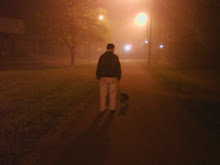
Friday was a strange day. Woke up feeling blue and out of sorts. Any number of little things went wrong, small disappointments and frustrations confirming that this was a lousy day. I fought with negativity most of the day – not my favorite internal conversation, but it was there and I have had this conversation before. Thankfully I was alone much of the day. I was not good company. By day’s end, the clouds were clearing. Julie, Sarah and I traveled to the Twin Cities to spend time with our daughter Beth.
Saturday was an entirely different day. In the morning we went shopping with Sarah looking for a prom dress. It will be her last high school prom and while dress shopping has never really been on my favorite list of activities, being there with and for Sarah was special. In the afternoon I participated in a clergy panel at a conference at the University of Minnesota Medical School. The conference was sponsored by Med Students for Choice, and my daughter Beth had asked if I would be willing to be part of that panel. I was pleased to participate, and even more pleased that Beth asked. It was wonderful to be with her as she was with some of her med school classmates. After returning to Duluth that evening, Julie and I went to a local venue to listen to our son David play back-up mandolin for his friend Ryan, who is a singer and guitarist. I could not have had a better day, for I got to spend parts of it with my wife and with my children. I am blessed with a wonderful family.
Sunday – church was great. It was Girl Scout Sunday, and someone else preached and did a very nice job. We shared communion and that is often moving and meaningful for me. Following worship I participated in a class which this week was led by a guest. We had asked a local university instructor who is from Haiti to share his family’s experience with the recent earthquake. All who heard were moved by his story and the story of the people of Haiti.
Whatever ghosts were haunting me on Friday, and I know they will return from time to time, had been chased away. Negativity will rear its ugly head again, but I will struggle with it and against it. I have much to be thankful for, and there is healing work to do in the world.
With Faith and With Feathers,
David
Sunday, March 7, 2010

Friday, February 26, 2010
Jazz
I am a member of the Jazz Heritage Society. No need to send congratulatory cards. It is a music club to which anyone can belong. I am guessing that such clubs are dying out with on-line purchasing and iTunes and all, but I am holding on. By the way, the club offers on-line ordering. Every so often, I order music through the club (usually by sending the card back through the mail – someone needs to help keep the US Postal Service afloat) and about three weeks later my order arrives in the mail. It makes that day’s mail more enjoyable.
My history with jazz goes back to college. I listened to jazz occasionally then. I remember hearing John Coltrane’s “Central Park West” in a class on Art in America, and I was swept up in its beauty. Every so often, I would listen to some jazz here and there until about eight years ago I sort of “rediscovered” jazz with a passion.
Those who know me or have read this blog for any length of time know of my love for music. That love bursts the bounds of style and genre. Sometimes the wordless beauty of jazz (though I also appreciate jazz vocals) touches me deeply in a wonderfully unique way. The richness of a John Coltrane ballad like “Naima” or “After the Rain” moves my soul, as does the sheer joy of a Louis Armstrong trumpet solo.
My most recent jazz listening, care of the Jazz Heritage Society, has been “Duke Ellington: The Great Paris Concert.” Ellington’s large jazz ensembles could swing with such joy. From the first piano chords which led into “Rockin’ in Rhythm” I was smiling. My heart was smiling. My soul was smiling. The music testified again to the truth of the words of jazz drummer Art Blakey: Jazz washes away the dust of everyday life.
And if you’ve not listened to jazz in awhile, click this link to Coltrane’s “After the Rain”
John Coltrane, After the Rain
With Faith and With Feathers,
David
My history with jazz goes back to college. I listened to jazz occasionally then. I remember hearing John Coltrane’s “Central Park West” in a class on Art in America, and I was swept up in its beauty. Every so often, I would listen to some jazz here and there until about eight years ago I sort of “rediscovered” jazz with a passion.
Those who know me or have read this blog for any length of time know of my love for music. That love bursts the bounds of style and genre. Sometimes the wordless beauty of jazz (though I also appreciate jazz vocals) touches me deeply in a wonderfully unique way. The richness of a John Coltrane ballad like “Naima” or “After the Rain” moves my soul, as does the sheer joy of a Louis Armstrong trumpet solo.
My most recent jazz listening, care of the Jazz Heritage Society, has been “Duke Ellington: The Great Paris Concert.” Ellington’s large jazz ensembles could swing with such joy. From the first piano chords which led into “Rockin’ in Rhythm” I was smiling. My heart was smiling. My soul was smiling. The music testified again to the truth of the words of jazz drummer Art Blakey: Jazz washes away the dust of everyday life.
And if you’ve not listened to jazz in awhile, click this link to Coltrane’s “After the Rain”
John Coltrane, After the Rain
With Faith and With Feathers,
David
Friday, February 19, 2010
Whipped Cream and Other Delights
Last year as I placed ashes on foreheads or hands on Ash Wednesday, reminding worshippers of our bodily life and our mortality, my own father was dying. He passed away last March. I couldn’t help but think about this on Wednesday night during worship.
My relationship with my dad was not the closest. He was not my confidant, nor my role model. The grief experienced during this past year has often been the grief for a relationship that never was. Yet my dad was funny, charming and a hospitable host. I appreciated those qualities. He enjoyed entertaining and parties, and he enjoyed music. Maybe that rubbed off a little, too.
At the house I grew up in, my parents purchased a console stereo and had speakers wired from the stereo upstairs into the basement rec room. It was there, with our walk-out basement, that my parents liked to entertain. The stereo allowed for ten records at a time to be put on the spindle, so one would drop after the previous record had finished playing. I later heard that this was not so good for records, but it worked well for these parties. Among the music my dad enjoyed was the Kingston Trio and Herb Alpert and the Tijuana Brass, and I appreciate the music of both.
All of this came back to me the other day as I grabbed my Herb Alpert and the Tijuana Brass CD on my way to the treadmill. Why I picked that particular CD up, I can’t say, but as I listened I thought back to that house and those days, and a certain fondness warmed my heart.
O.K, I enjoy Herb Alpert and the Tijuana Brass. The music may not be the most sophisticated, as the song titles may indicate – “Whipped Cream,” “A Taste of Honey,” “Lollipops and Roses.” Still there is something here that lightens the heart, even if the mind may not be deeply challenged. That’s o.k. In the economy of grace, I think there is room for whipped cream and other delights.
More importantly, in the economy of grace, even difficult relationships bequeath gifts.
With Faith and With Feathers,
David
My relationship with my dad was not the closest. He was not my confidant, nor my role model. The grief experienced during this past year has often been the grief for a relationship that never was. Yet my dad was funny, charming and a hospitable host. I appreciated those qualities. He enjoyed entertaining and parties, and he enjoyed music. Maybe that rubbed off a little, too.
At the house I grew up in, my parents purchased a console stereo and had speakers wired from the stereo upstairs into the basement rec room. It was there, with our walk-out basement, that my parents liked to entertain. The stereo allowed for ten records at a time to be put on the spindle, so one would drop after the previous record had finished playing. I later heard that this was not so good for records, but it worked well for these parties. Among the music my dad enjoyed was the Kingston Trio and Herb Alpert and the Tijuana Brass, and I appreciate the music of both.
All of this came back to me the other day as I grabbed my Herb Alpert and the Tijuana Brass CD on my way to the treadmill. Why I picked that particular CD up, I can’t say, but as I listened I thought back to that house and those days, and a certain fondness warmed my heart.
O.K, I enjoy Herb Alpert and the Tijuana Brass. The music may not be the most sophisticated, as the song titles may indicate – “Whipped Cream,” “A Taste of Honey,” “Lollipops and Roses.” Still there is something here that lightens the heart, even if the mind may not be deeply challenged. That’s o.k. In the economy of grace, I think there is room for whipped cream and other delights.
More importantly, in the economy of grace, even difficult relationships bequeath gifts.
With Faith and With Feathers,
David
Friday, February 12, 2010
Sometimes I am asked what I am reading or listening to. I appreciate that some are interested in this, so here is my current reading and listening list.
During the winter, when walking outside can be problematic here in Duluth, I use our treadmill a lot. On the treadmill, I often watch videos, and the most recent video I watched while walking/running was “The Beatles: the first U.S. visit.” I enjoyed watching the excitement this group of musicians brought to a country just months after President Kennedy was assassinated. For three weeks in a row, the Beatles were on The Ed Sullivan Show. Given the fragmentation of media, we are not likely ever to have the kind of attention given to any single entertainer that was given to the Beatles. That they were wonderful musicians certainly helped.
The three CDs played most recently in my car while driving:
Charlie Parker, The Complete Savoy and Dial Master Takes
The Beatles, Rubber Soul
The Beatles, Revolver
Books:
Christian Smith, Souls in Transition: the religious and spiritual lives of emerging adults. I have had the opportunity to read this with faculty from private colleges throughout the country and thankful to the College of St. Scholastica for helping this happen. I am just getting into the book, but thus far it is fascinating.
Huston Smith, The World’s Religions. I am reading this with a men’s group at our church. Smith writes exceptionally well and invites us into the wisdom of the world’s religious traditions. This is a nice follow to reading Smith’s autobiography Tales of Wonder last summer.
Ann Patchett, The Patron Saint of Liars. We are reading this novel in an interfaith book group. Again, I am in the early pages, but am thoroughly enjoying the read.
Mel White, Stranger at the Gate: to be gay and Christian in America. Mel White is going to be the keynote speaker at a Duluth-area conference this April, and people in our area churches are encouraged to read this, his autobiography.
I just got back from the Board of Ordained Ministry interview retreat, and there we discussed the importance of clergy reading theology, at least from time to time. None of the books above is a theological work, strictly speaking, though they have theological dimensions to them. One of the theological works I have read more recently is Peter C. Hodgson, Liberal Theology: a radical vision. Hodgson’s brief book seeks to assess the current state of “liberal” Christian theology and construct a vision for its future. I will be adding some more theology to my reading list as space opens.
With Faith and With Feathers,
David
During the winter, when walking outside can be problematic here in Duluth, I use our treadmill a lot. On the treadmill, I often watch videos, and the most recent video I watched while walking/running was “The Beatles: the first U.S. visit.” I enjoyed watching the excitement this group of musicians brought to a country just months after President Kennedy was assassinated. For three weeks in a row, the Beatles were on The Ed Sullivan Show. Given the fragmentation of media, we are not likely ever to have the kind of attention given to any single entertainer that was given to the Beatles. That they were wonderful musicians certainly helped.
The three CDs played most recently in my car while driving:
Charlie Parker, The Complete Savoy and Dial Master Takes
The Beatles, Rubber Soul
The Beatles, Revolver
Books:
Christian Smith, Souls in Transition: the religious and spiritual lives of emerging adults. I have had the opportunity to read this with faculty from private colleges throughout the country and thankful to the College of St. Scholastica for helping this happen. I am just getting into the book, but thus far it is fascinating.
Huston Smith, The World’s Religions. I am reading this with a men’s group at our church. Smith writes exceptionally well and invites us into the wisdom of the world’s religious traditions. This is a nice follow to reading Smith’s autobiography Tales of Wonder last summer.
Ann Patchett, The Patron Saint of Liars. We are reading this novel in an interfaith book group. Again, I am in the early pages, but am thoroughly enjoying the read.
Mel White, Stranger at the Gate: to be gay and Christian in America. Mel White is going to be the keynote speaker at a Duluth-area conference this April, and people in our area churches are encouraged to read this, his autobiography.
I just got back from the Board of Ordained Ministry interview retreat, and there we discussed the importance of clergy reading theology, at least from time to time. None of the books above is a theological work, strictly speaking, though they have theological dimensions to them. One of the theological works I have read more recently is Peter C. Hodgson, Liberal Theology: a radical vision. Hodgson’s brief book seeks to assess the current state of “liberal” Christian theology and construct a vision for its future. I will be adding some more theology to my reading list as space opens.
With Faith and With Feathers,
David
Tuesday, February 2, 2010
I admit it. I am a sucker for intriguing titles. I got into the entire Julia Spencer-Fleming mystery series simply because her first book was entitled In the Bleak Midwinter and I spotted it on the store shelf. It was worth the read and I commend her work to any who are mystery aficionados.
So imagine my delight in coming across the story collection by Amy Bloom, Where the God of Love Hangs Out. Talk about a captivating title! So I read the title story with great anticipation. Would it be rich in theological references? Would there be symbolism to engage the curious mind? None of these.
The chief protagonist of the story is a man named Ray who lives in a small town, probably in Connecticut, called Farnham. Ray is a semi-retired attorney who has very mixed feelings about his marriage to a sometimes pretentious and difficult woman named Eleanor. Ellie reminds Ray every now and again that they promised to be married “for better or for worse.” She is not an entirely unsympathetic character, having undergone a hysterectomy at age 33.
The other primary character in the story is Ray’s daughter-in-law, Macy. She is a young woman whose life has been a struggle. Her mother has drug problems and borrows money. Macy was fortunate to receive a college scholarship, but lived in a boarding house and worked hard just to make ends meet. Macy has also lied to Ray and her husband, Ray and Ellie’s son Neil, about her parents and her background. She has told them that her parents are dead.
Another particularly memorable character is Randeane, owner and waitress at The Cup coffee shop. She describes her father as Jewish left-wing and her mother as white trash Pentecostal. Ray believes he is in love with Randeane. Randeane offers wisdom in the story. Visiting Randeane, Ray is offered his choice of a chair or a hammock. He chooses the chair, telling Randeane that the hammock is too unpredictable. “Oh, life’s a hammock,” Randeane said.
What the author provides in about twenty pages are small incidents which tell us something about these people and their relationships, especially about Ray and Macy. We move through moments of disappointment, sadness, embarrassment, small pleasures, and a few deep joys. No grand theology. No mysterious symbolism, save the hammock.
Maybe that’s just the point of the story. Where does the God of love hang out? Maybe God hangs out in the midst of ordinary lives that are sad and disappointing and embarrassing; lives with scars from hurts large and small; lives with small pleasures and a few deep joys. Where else would the God of love hang out? Where else is God more needed?
With Faith and With Feathers,
David
So imagine my delight in coming across the story collection by Amy Bloom, Where the God of Love Hangs Out. Talk about a captivating title! So I read the title story with great anticipation. Would it be rich in theological references? Would there be symbolism to engage the curious mind? None of these.
The chief protagonist of the story is a man named Ray who lives in a small town, probably in Connecticut, called Farnham. Ray is a semi-retired attorney who has very mixed feelings about his marriage to a sometimes pretentious and difficult woman named Eleanor. Ellie reminds Ray every now and again that they promised to be married “for better or for worse.” She is not an entirely unsympathetic character, having undergone a hysterectomy at age 33.
The other primary character in the story is Ray’s daughter-in-law, Macy. She is a young woman whose life has been a struggle. Her mother has drug problems and borrows money. Macy was fortunate to receive a college scholarship, but lived in a boarding house and worked hard just to make ends meet. Macy has also lied to Ray and her husband, Ray and Ellie’s son Neil, about her parents and her background. She has told them that her parents are dead.
Another particularly memorable character is Randeane, owner and waitress at The Cup coffee shop. She describes her father as Jewish left-wing and her mother as white trash Pentecostal. Ray believes he is in love with Randeane. Randeane offers wisdom in the story. Visiting Randeane, Ray is offered his choice of a chair or a hammock. He chooses the chair, telling Randeane that the hammock is too unpredictable. “Oh, life’s a hammock,” Randeane said.
What the author provides in about twenty pages are small incidents which tell us something about these people and their relationships, especially about Ray and Macy. We move through moments of disappointment, sadness, embarrassment, small pleasures, and a few deep joys. No grand theology. No mysterious symbolism, save the hammock.
Maybe that’s just the point of the story. Where does the God of love hang out? Maybe God hangs out in the midst of ordinary lives that are sad and disappointing and embarrassing; lives with scars from hurts large and small; lives with small pleasures and a few deep joys. Where else would the God of love hang out? Where else is God more needed?
With Faith and With Feathers,
David
Sunday, January 24, 2010
We are into a new year, but I have some unfinished business from last year. In 2009, I turned 50. Sometime during the year, I began to put together a small list of works (books and music) that were published, produced, released in 1959, the year of my birth, and found their way into my life. Here is my list in no particular order:
Charles Mingus, Mingus Ah Um
Miles Davis, Kind of Blue
Gary Snyder, Rip Rap and Other Poems
Robert Lowell, Life Studies
Jack Kerouac, Mexico City Blues
Dave Brubeck, Time Out
John Coltrane, Giant Steps
Ornette Coleman, The Shape of Jazz to Come
John Updike, The Poorhouse Fair
Grateful for birth, grateful for the works born the year I was that have enriched my life.
With Faith and With Feathers,
David
Charles Mingus, Mingus Ah Um
Miles Davis, Kind of Blue
Gary Snyder, Rip Rap and Other Poems
Robert Lowell, Life Studies
Jack Kerouac, Mexico City Blues
Dave Brubeck, Time Out
John Coltrane, Giant Steps
Ornette Coleman, The Shape of Jazz to Come
John Updike, The Poorhouse Fair
Grateful for birth, grateful for the works born the year I was that have enriched my life.
With Faith and With Feathers,
David
Friday, January 15, 2010
Theology That's Too Pat
Bad theology can be irritating. Really bad theology hurts and does damage. This week Haiti, the poorest nation in the Western Hemisphere, was devastated by an earthquake. Much of the news has been soul-shaking and heart-rending Not long after I heard the news, I was on Facebook and read that my friend Ken Carter’s wife, Pam, was in Haiti, but had survived safely. While I’ve never met Pam, I was very glad for this news. A couple of days later, I heard heartbreaking news that hit close to home. Two friends of mine, April and Judd Larson, both pastors, had lost their son, Ben, in the earthquake. Ben was a seminarian and was in Haiti teaching in a Lutheran Church.
In between came the comments of the Rev. Dr. Pat Robertson. I have listened to them a few times to make sure the quotes are accurate. While in the midst of raising funds to help the earthquake victims in Haiti, Pat opined theologically about the tragedy on The 700 Club. Something happened a long time ago in Haiti, and people might not want to talk about it. They were under the heel of the French. You know, Napoleon III, or whatever. And they got together and swore a pact to the devil. They said, we will serve you if you'll get us free from the French. True story. And so, the devil said, okay it's a deal… The Haitians revolted and got themselves free. Ever since, they have been cursed by one thing after the other. That island of Hispaniola is one island. It is cut down the middle; on the one side is Haiti on the other is the Dominican Republic. Dominican Republic is prosperous, healthy, full of resorts, etc. Haiti is in desperate poverty. Same island. They need to have and we need to pray for them a great turning to God and out of this tragedy I'm optimistic something good may come. But right now we are helping the suffering people and the suffering is unimaginable.
I do not want to disparage Rev. Robertson’s character or his Christian faith. I do want to take his theology to task. It is a nice, neat theology, very “pat” (couldn’t resist the pun). God is in control of all that happens, and this God takes issue with those who don’t pay him the proper respect. The Haitians made a pact with the devil and that is why they are poor and suffering. We can now throw an earthquake in there for good measure. This God seems rather insecure – needing constant reaffirmation of his “Godness.” This God is peevish, and vengeful. And what about those who were in Haiti doing good and bringing the good news of God’s love in Jesus Christ and were killed in the earthquake? Well, they might be considered collateral damage in God’s plan. Pat Robertson is a deeply committed Christian, and he will offer a lot of help to the people of Haiti. I don’t think his theology is very consistent with the Christian faith as I know it.
That” pat theology” is not difficult to take issue with, but what if we push the envelope a little. Other Christians will say that while we cannot know why, God must have had some purpose in “allowing” this to happen. This theological position does not make God as directly responsible for the earthquake, but it does retain a sense of God’s ultimate control and purposefulness in whatever happens. I struggle with this position, too. What purpose does this earthquake serve? What purpose could there be in 50,000 plus deaths, including the death of a young seminarian? If an earthquake needed to happen someplace to prove some point, why Haiti – a country where daily life contained more than its share of suffering? Even the theology of God “allowing” is too pat for me.
I remember a story about Jesus in John’s gospel (chapter 9). There is a blind man, a man blind from birth. Jesus’ disciples ask the “why” question. “Teacher, who sinned, this man or his parents, that he was born blind?” How did Jesus respond? “Neither this man nor his parents sinned; he was born blind so that God’s works might be revealed in him.” Now there is some ambiguity here. Is Jesus trying to say that God caused the man to be born blind, or allowed the man to be born blind so that Jesus could come and heal him later? Some might read it that way. I like Eugene Peterson’s take (The Message). Jesus says, “You’re asking the wrong question. You’re looking for someone to blame. There is no such cause-effect here.” In other words, maybe Jesus is saying that the cause of tragedy is shrouded in some mystery, that trying to be too pat in our thinking leads us astray. Might it be that the earth needs to be the way it is for it to exist at all, the planet that includes faults and fissures that sometimes shift causing enormous disaster, suffering and heartache? In any event, the place to look for God is not as a causal factor in all that happens, but in the response to suffering. God is present when healing happens. God is present when the grieving are comforted. God is present when the hungry are fed and water delivered to the thirsty. God is present when people are inspired to reach out across the globe to people they may never meet to help them put their lives back together. This God is not insecure and peevish and vengeful. This God is not concerned about ancient slights, but cares about the well-being of all. This God is that quiet voice deep inside that whispers to us – “there is your brother, there is your sister, these are your children and your grandparents, help.” That’s the God I see in Jesus. It means my theology is sometimes messy and filled with ambiguity and “what ifs”. Whispers are sometimes difficult to detect and hard to discern. Somehow a messy theology seems to fit better with our complex world than a theology that is too “pat.”
With Faith and With Feathers,
David
In between came the comments of the Rev. Dr. Pat Robertson. I have listened to them a few times to make sure the quotes are accurate. While in the midst of raising funds to help the earthquake victims in Haiti, Pat opined theologically about the tragedy on The 700 Club. Something happened a long time ago in Haiti, and people might not want to talk about it. They were under the heel of the French. You know, Napoleon III, or whatever. And they got together and swore a pact to the devil. They said, we will serve you if you'll get us free from the French. True story. And so, the devil said, okay it's a deal… The Haitians revolted and got themselves free. Ever since, they have been cursed by one thing after the other. That island of Hispaniola is one island. It is cut down the middle; on the one side is Haiti on the other is the Dominican Republic. Dominican Republic is prosperous, healthy, full of resorts, etc. Haiti is in desperate poverty. Same island. They need to have and we need to pray for them a great turning to God and out of this tragedy I'm optimistic something good may come. But right now we are helping the suffering people and the suffering is unimaginable.
I do not want to disparage Rev. Robertson’s character or his Christian faith. I do want to take his theology to task. It is a nice, neat theology, very “pat” (couldn’t resist the pun). God is in control of all that happens, and this God takes issue with those who don’t pay him the proper respect. The Haitians made a pact with the devil and that is why they are poor and suffering. We can now throw an earthquake in there for good measure. This God seems rather insecure – needing constant reaffirmation of his “Godness.” This God is peevish, and vengeful. And what about those who were in Haiti doing good and bringing the good news of God’s love in Jesus Christ and were killed in the earthquake? Well, they might be considered collateral damage in God’s plan. Pat Robertson is a deeply committed Christian, and he will offer a lot of help to the people of Haiti. I don’t think his theology is very consistent with the Christian faith as I know it.
That” pat theology” is not difficult to take issue with, but what if we push the envelope a little. Other Christians will say that while we cannot know why, God must have had some purpose in “allowing” this to happen. This theological position does not make God as directly responsible for the earthquake, but it does retain a sense of God’s ultimate control and purposefulness in whatever happens. I struggle with this position, too. What purpose does this earthquake serve? What purpose could there be in 50,000 plus deaths, including the death of a young seminarian? If an earthquake needed to happen someplace to prove some point, why Haiti – a country where daily life contained more than its share of suffering? Even the theology of God “allowing” is too pat for me.
I remember a story about Jesus in John’s gospel (chapter 9). There is a blind man, a man blind from birth. Jesus’ disciples ask the “why” question. “Teacher, who sinned, this man or his parents, that he was born blind?” How did Jesus respond? “Neither this man nor his parents sinned; he was born blind so that God’s works might be revealed in him.” Now there is some ambiguity here. Is Jesus trying to say that God caused the man to be born blind, or allowed the man to be born blind so that Jesus could come and heal him later? Some might read it that way. I like Eugene Peterson’s take (The Message). Jesus says, “You’re asking the wrong question. You’re looking for someone to blame. There is no such cause-effect here.” In other words, maybe Jesus is saying that the cause of tragedy is shrouded in some mystery, that trying to be too pat in our thinking leads us astray. Might it be that the earth needs to be the way it is for it to exist at all, the planet that includes faults and fissures that sometimes shift causing enormous disaster, suffering and heartache? In any event, the place to look for God is not as a causal factor in all that happens, but in the response to suffering. God is present when healing happens. God is present when the grieving are comforted. God is present when the hungry are fed and water delivered to the thirsty. God is present when people are inspired to reach out across the globe to people they may never meet to help them put their lives back together. This God is not insecure and peevish and vengeful. This God is not concerned about ancient slights, but cares about the well-being of all. This God is that quiet voice deep inside that whispers to us – “there is your brother, there is your sister, these are your children and your grandparents, help.” That’s the God I see in Jesus. It means my theology is sometimes messy and filled with ambiguity and “what ifs”. Whispers are sometimes difficult to detect and hard to discern. Somehow a messy theology seems to fit better with our complex world than a theology that is too “pat.”
With Faith and With Feathers,
David
Subscribe to:
Posts (Atom)