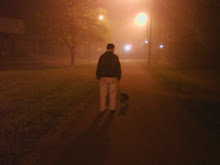
Do you have to let it linger?
The Cranberries
Three days after Ash Wednesday, there remain on my hands small places where I can still see traces of the ashes from that night. They linger.
The season of Lent is a bit about lingering, about slowing down, about listening intently for God’s voice in the rush and din of our day to day lives, about taking some time away from those lives to listen. Perhaps it is also about being willing to linger with some of our own experiences.
Not long ago, in Stephen Mitchell’s The Gospel According to Jesus I came across Mitchell’s translation of the original version of Rilke’s Tenth Duino Elegy (p. 159). It is about lingering.
How dear you will be to me, then, you nights
of anguish. Why didn’t I kneel more deeply to accept you,
inconsolable sisters, and, surrendering, lose myself
in your loosened hair. How we squander our hours of pain.
How we gaze beyond them into the bitter duration
to see if they have an end. Though they are really
seasons of us, our winter-
enduring foliage, ponds, meadows, our inborn landscape,
where birds and reed-dwelling creatures are at home.
We need not search out difficult experiences nor suppose that God creates difficulty and pain so we can learn from it. Pain and difficulty will come. Joan Chittister puts it simply and well – “no one goes through life unscathed” (Called To Question, 224). What might we learn and how might we grow if we linger with such experiences, even if only for a while?
With Faith and With Feathers,
David
Saturday, February 16, 2013

Saturday, February 2, 2013
Yearning
Do you ever yearn, George?
Kramer to George, Seinfeld
The other night I was on the treadmill at home, a place I need to be more regularly. While there I watched part of a documentary about Bruce Springsteen and the making of his seminal album, Born To Run. I was captivated by Springsteen’s artistic vision and by the effort and energy that went into trying to put that vision into vinyl. Nearly every word, every phrase, every instrument, every note was pondered then played, then played again. Springsteen sought to put his thoughts and feelings into music, something that I have long admired in his entire body of work. While I appreciate everything he has done, there is something very special about Born To Run.
As I was watching, I also felt again some of those feelings I felt when I first listened to the record in my late teens. The joy, the angst, the longing, the searching, the yearning, that was on that record struck a deep chord in my young man’s soul. “But tonight you’re gonna break on through to the inside/And it’ll be right.” “Cause baby I’m just a scared and lonely rider/But I gotta know how it feels/I want to know if your love is wild/Girl I want to know if love is real. “Tramps like us, baby we were born to run.”
Coming upstairs when my time on the treadmill was over, I saw my daughter getting ready to watch a movie. She is home between her January class and the beginning of spring semester. It was 10:30 p.m. I thought of all the times I watched those late night movies in my own college days. While many movies are just for fun, many are also dream machines, stoking the imagination, feeding a certain yearning for more life – deeper, fuller, richer.
I’m 53, and glad for all the experiences I have had since those days of late night movies, and Born To Run spinning on a turntable (and sitting here typing on my computer I am looking at the vinyl album cover, now darkened around the edges). At the same time I never want to completely lose that part of a young man’s soul that continues to reach for something more, that continues to yearn for deeper thinking and feeling, that longs for a better world.
I don’t want to end up simply having visited this world.
Mary Oliver, “When Death Comes”
With Faith and With Feathers,
David
Kramer to George, Seinfeld
The other night I was on the treadmill at home, a place I need to be more regularly. While there I watched part of a documentary about Bruce Springsteen and the making of his seminal album, Born To Run. I was captivated by Springsteen’s artistic vision and by the effort and energy that went into trying to put that vision into vinyl. Nearly every word, every phrase, every instrument, every note was pondered then played, then played again. Springsteen sought to put his thoughts and feelings into music, something that I have long admired in his entire body of work. While I appreciate everything he has done, there is something very special about Born To Run.
As I was watching, I also felt again some of those feelings I felt when I first listened to the record in my late teens. The joy, the angst, the longing, the searching, the yearning, that was on that record struck a deep chord in my young man’s soul. “But tonight you’re gonna break on through to the inside/And it’ll be right.” “Cause baby I’m just a scared and lonely rider/But I gotta know how it feels/I want to know if your love is wild/Girl I want to know if love is real. “Tramps like us, baby we were born to run.”
Coming upstairs when my time on the treadmill was over, I saw my daughter getting ready to watch a movie. She is home between her January class and the beginning of spring semester. It was 10:30 p.m. I thought of all the times I watched those late night movies in my own college days. While many movies are just for fun, many are also dream machines, stoking the imagination, feeding a certain yearning for more life – deeper, fuller, richer.
I’m 53, and glad for all the experiences I have had since those days of late night movies, and Born To Run spinning on a turntable (and sitting here typing on my computer I am looking at the vinyl album cover, now darkened around the edges). At the same time I never want to completely lose that part of a young man’s soul that continues to reach for something more, that continues to yearn for deeper thinking and feeling, that longs for a better world.
I don’t want to end up simply having visited this world.
Mary Oliver, “When Death Comes”
With Faith and With Feathers,
David
Saturday, January 19, 2013
Serendipity/Grace
Finding time to write has been a challenge. Other things have taken precedence, and needed to. On December 31 we admitted my mother-in-law, Lois, to Solvay Hospice House here in Duluth. Five days later, she died.
I thoughtfully and passionately believe in God. More than that I have faith in God, that is, I trust God, trust that the meaning of my life is the meaning it has for God. However, I don’t believe that God is a cosmic controlling power. I don’t believe “God determines every detail of the world” (Process Theology: an introductory exposition, 9). My theology could be wrong here, but I don’t see how a theology that has God determining all that happens is compatible with a significant notion of human freedom. What makes God God, in my theological view, is that God is the only necessary being and God’s purpose, while it can be temporarily thwarted, is never entirely defeated. God’s purposes keep coming again and again and again into human lives and into the world.
If God does not determine every detail of the world, the fact that my wife Julie and I now live in Duluth, Minnesota is not simply something God arranged well ahead of our coming. Yet I believe that we have been here for seven and a half years, now, is seen as good in God’s eyes. I trust that God’s Spirit influenced the events which brought us to be here now.
You see, both Julie and I grew up in this community. We went to different high schools here, and met at the University of Minnesota, Duluth. While Duluth is a wonderful place, we did not aspire to return here. As a United Methodist pastor appointed by a bishop, aspiring to be some particular place is a good recipe for frustration. Seven and a half years ago, I was appointed as pastor of First United Methodist Church, Duluth. We returned home.
Four years ago, my father died. We were here. Two years ago, a close cousin of my mother’s died. We were here. A year ago, my grandmother died. We were here. Now just a couple of weeks ago, Julie’s mother died. We have been here during her final illness and through her death.
I believe thoughtfully and passionately in God. I trust God. I believe God works through influence, and God delights in serendipity. That we have been here now has been serendipity. That we have been here now has been grace. Such serendipity, such grace is part of God’s purpose in the world. Thanks be to God.
With Faith and With Feathers,
David
I thoughtfully and passionately believe in God. More than that I have faith in God, that is, I trust God, trust that the meaning of my life is the meaning it has for God. However, I don’t believe that God is a cosmic controlling power. I don’t believe “God determines every detail of the world” (Process Theology: an introductory exposition, 9). My theology could be wrong here, but I don’t see how a theology that has God determining all that happens is compatible with a significant notion of human freedom. What makes God God, in my theological view, is that God is the only necessary being and God’s purpose, while it can be temporarily thwarted, is never entirely defeated. God’s purposes keep coming again and again and again into human lives and into the world.
If God does not determine every detail of the world, the fact that my wife Julie and I now live in Duluth, Minnesota is not simply something God arranged well ahead of our coming. Yet I believe that we have been here for seven and a half years, now, is seen as good in God’s eyes. I trust that God’s Spirit influenced the events which brought us to be here now.
You see, both Julie and I grew up in this community. We went to different high schools here, and met at the University of Minnesota, Duluth. While Duluth is a wonderful place, we did not aspire to return here. As a United Methodist pastor appointed by a bishop, aspiring to be some particular place is a good recipe for frustration. Seven and a half years ago, I was appointed as pastor of First United Methodist Church, Duluth. We returned home.
Four years ago, my father died. We were here. Two years ago, a close cousin of my mother’s died. We were here. A year ago, my grandmother died. We were here. Now just a couple of weeks ago, Julie’s mother died. We have been here during her final illness and through her death.
I believe thoughtfully and passionately in God. I trust God. I believe God works through influence, and God delights in serendipity. That we have been here now has been serendipity. That we have been here now has been grace. Such serendipity, such grace is part of God’s purpose in the world. Thanks be to God.
With Faith and With Feathers,
David
Friday, December 21, 2012
Resonant Thoughts
Tomorrow I will be officiating at the funeral of a lovely woman from my congregation. She died earlier this week at age 82. Three years ago, I officiated at her wedding. It was her third marriage following the loss of two previous spouses. It was an occasion filled with joy. There will be joy as we celebrate her life tomorrow, but joy marked with sadness and grief.
In the wedding reflection I offered three years ago, I included these thoughts: Of course evil and ugliness exists, as much now as ever. These get all the headlines. We all know about the bad news. Plenty of reasons for pessimism. The wrongs of the world are clear. Meanwhile, I remain astonished at the good and lovely that exists. And most of it is free and readily available if I’ll look for it. (Robert Fulgham, What On Earth Have I Done?)
In that wedding reflection, I read a poem which included these words:
We live in a world of motion and distance.
The heart flies from tree to bird,
from bird to distant star,
from star to love; and love grows
in the quiet house, turning and working,
servant of thought and a lamp held in one hand.
(from “Distances” Phillippe Jaccottet)
Somehow as I think about this funeral, as I think about the twenty-three year old making slow progress in her recovery in a local ICU, as I think about the world after Newtown, as I think about holding a candle on Christmas Eve and singing “Silent Night,” these words spoken three years ago still resonate.
With Faith and With Feathers,
David
In the wedding reflection I offered three years ago, I included these thoughts: Of course evil and ugliness exists, as much now as ever. These get all the headlines. We all know about the bad news. Plenty of reasons for pessimism. The wrongs of the world are clear. Meanwhile, I remain astonished at the good and lovely that exists. And most of it is free and readily available if I’ll look for it. (Robert Fulgham, What On Earth Have I Done?)
In that wedding reflection, I read a poem which included these words:
We live in a world of motion and distance.
The heart flies from tree to bird,
from bird to distant star,
from star to love; and love grows
in the quiet house, turning and working,
servant of thought and a lamp held in one hand.
(from “Distances” Phillippe Jaccottet)
Somehow as I think about this funeral, as I think about the twenty-three year old making slow progress in her recovery in a local ICU, as I think about the world after Newtown, as I think about holding a candle on Christmas Eve and singing “Silent Night,” these words spoken three years ago still resonate.
With Faith and With Feathers,
David
Friday, December 7, 2012
Cheerfully Enough
So let us go on cheerfully enough,
this and every crisping day,
though the sun be swinging east,
and the ponds be cold and black,
and the sweets of the year be doomed.
From “Lines Written in the Days of Growing Darkness” Mary Oliver, A Thousand Mornings
Every new book of poetry by Mary Oliver is an occasion for rejoicing, and an occasion for fresh insight and wisdom to break it. In the poem from her newest book quoted above, Oliver is reflecting on the world as autumn moves into winter. The days shorten. The dark periods lengthen. It inevitably happens every year, and we know that the death of winter will open up again into the new life of spring. The poet advises that we “go on cheerfully enough.”
Human lives are like that too. We experience shadows lengthening and receding in our lives. We get hurt. We hurt others and regret it. Life disappoints us. We disappoint ourselves. Relationships get strained. People we care about get sick; they suffer. People we love die. Psychoanalyst Michael Eigen writes, “One never recovers from being human” (Contact With the Depths).
Yet the channels in the soul opened by feeling these dimensions of our experience might also be channels for deepened joy, for new insights, for feelings of wonder and well-being. Suffering is a part of being human. Growth through our experience of suffering is not so inevitable, but it is possible.
As a Christian, I believe God walks with us in the midst of our suffering, and that God is always influencing us toward growth.
Suffering happens. Growth is possible. Therein lies hope, and a reason for going on cheerfully enough.
With Faith and With Feathers,
David
Saturday, December 1, 2012
Kristeva Again
In May I wrote that my conversation with Julia Kristeva is not over. It is not. Recently I read her essay “Thinking About Liberty in Dark Times” and her thinking again enriches mine. The essay was Kristeva’s presentation on being the first recipient of the Holberg International Prize. The Holberg International Memorial Prize is awarded annually for outstanding scholarly work in the fields of the arts and humanities, social sciences, law and theology.
Kristeva asserts that there are two versions of freedom “economic neo-liberalism and fraternal and poetic freedom, causal and ‘disclosing’ versions of freedom” (Hatred and Forgiveness, 21). Both have value and both are “more multiple, more complex” (22) than we often think.
Kristeva, in thinking about liberty in dark times, is not trying to argue that economic freedom is unimportant. Her concern is that it is in danger of being the only way we think about freedom, especially in places like the United States. “All indications are that we are being carried away by the maelstrom of our calculus thinking and by our consumerism” (17). “America has imposed a financial, economic, and cultural oligarchy that is liberal in its inspiration but risks excluding an important dimension of human destiny” (21). Kristeva is not a reactionary French anti-American. She expresses deep appreciation for our country. Her concern is a certain modern blindness toward another dimension of freedom.
Thinking with Kristeva, religious faith, religious thinking, religious discourse, at its core, contributes something toward poetic freedom, though we are not always immune from being captured by the maelstrom of calculus thinking and consumerism. Sometimes I wonder about the language we use in discussing church growth. Nevertheless, religion, at its best, is important for poetic freedom, as Kristeva seems to suggest.
Now religion is not always at its best. In our modern world, Kristeva notes a “rebirth of religious sects for which the sacred is no longer “a permanent questioning” as the very concept of human dignity would require” (18). Yet at its best religion contributes to poetic freedom. For Kristeva: “I understand the sacred as the desire of human beings to think, not in the sense of calculation, but rather in the sense of a need for fundamental questioning” (12).
O.K. So all this is pretty abstract, pretty heady. What thinking with Kristeva reaffirms for me is the importance of a thoughtful, passionate and compassionate faith. Reading our sacred texts together, we in faith communities are invited to see the world in new ways, to break free of limited views of freedom offered by the wider culture. I believe there is something of the freedom of God’s Spirit in poetic freedom. In that freedom we, at our best, can live differently.
With Faith and With Feathers,
David
Kristeva asserts that there are two versions of freedom “economic neo-liberalism and fraternal and poetic freedom, causal and ‘disclosing’ versions of freedom” (Hatred and Forgiveness, 21). Both have value and both are “more multiple, more complex” (22) than we often think.
Kristeva, in thinking about liberty in dark times, is not trying to argue that economic freedom is unimportant. Her concern is that it is in danger of being the only way we think about freedom, especially in places like the United States. “All indications are that we are being carried away by the maelstrom of our calculus thinking and by our consumerism” (17). “America has imposed a financial, economic, and cultural oligarchy that is liberal in its inspiration but risks excluding an important dimension of human destiny” (21). Kristeva is not a reactionary French anti-American. She expresses deep appreciation for our country. Her concern is a certain modern blindness toward another dimension of freedom.
Thinking with Kristeva, religious faith, religious thinking, religious discourse, at its core, contributes something toward poetic freedom, though we are not always immune from being captured by the maelstrom of calculus thinking and consumerism. Sometimes I wonder about the language we use in discussing church growth. Nevertheless, religion, at its best, is important for poetic freedom, as Kristeva seems to suggest.
Now religion is not always at its best. In our modern world, Kristeva notes a “rebirth of religious sects for which the sacred is no longer “a permanent questioning” as the very concept of human dignity would require” (18). Yet at its best religion contributes to poetic freedom. For Kristeva: “I understand the sacred as the desire of human beings to think, not in the sense of calculation, but rather in the sense of a need for fundamental questioning” (12).
O.K. So all this is pretty abstract, pretty heady. What thinking with Kristeva reaffirms for me is the importance of a thoughtful, passionate and compassionate faith. Reading our sacred texts together, we in faith communities are invited to see the world in new ways, to break free of limited views of freedom offered by the wider culture. I believe there is something of the freedom of God’s Spirit in poetic freedom. In that freedom we, at our best, can live differently.
With Faith and With Feathers,
David
Wednesday, November 21, 2012
Thanks Woody
I don’t recall which Woody Allen movie I saw first. I think it may have been Annie Hall. Annie Hall was released in 1977, the year I graduated from high school. The year I turned eighteen. The movie represented a kind of coming of age for Woody Allen, too. No longer simply a comedy set in the past or in the future or in some nameless south of the border country where revolving dictatorships could be seen as comic. In Annie Hall, Woody Allen was funny, even as he could explore with intelligence, kindness, and depth, the joys and fragilities of human relationships. Annie Hall won the Academy Award for Best Picture in 1977. It won my heart and soul for Woody Allen movies. If you’ve not seen Midnight in Paris, this long weekend may be a perfect opportunity.
A couple of years later, Allen released Manhattan, a film shot in black and white with a Gershwin soundtrack. Sad to say, I think it was the first time I ever heard “Rhapsody in Blue.” I loved the film. I still have the soundtrack on vinyl.
There is a scene from Manhattan that I have never forgotten, even if I have to look up the precise wording. Woody Allen’s character, Isaac or Ike, is reclining on a couch in his apartment. He is talking into a tape recorder. An idea for a short story about people in Manhattan who are constantly creating these real, unnecessary neurotic problems for themselves ‘cause it keeps them from dealing with more unsolvable, terrifying problems about the universe. It’s, uh… well, it has to be optimistic. Well, all right, why is live worth living? That’s a very good question. Well, there are certain things I guess that make it worthwhile. Uh, like what? Okay. Um… for me, oh I would say… what, Groucho Marx, Willie Mays, the second movement of the Jupiter Symphony, and Louis Armstrong’s recording of “Potatohead Blues,” Swedish movies, naturally, Sentimental Education by Flaubert, Marlon Brando, Frank Sinatra, those incredible apples and pears by Cezanne, uh, the crabs at Sam Wo’s, Tracy’s face
scene from Manhattan
So what makes life worth living for you? Where do you encounter life’s goodness? For we who believe in God we might say these are places where we encounter in one way or another God’s grace, God’s creativity, God’s love.
My list changes, and the list of music, books and movies is long and ever changing. There are also some relatively unchanging items. Times when Julie, David, Beth and Sarah are together (like this Thanksgiving). Doing something nice for someone and they have no idea who you are. The end of a worship service where everything has all fallen into place. The video of Brian Wilson performing “Surf’s Up.” U2 – “It’s a Beautiful Day.” Bob Dylan, “Like a Rolling Stone.” Bruce Springsteen, "Born to Run." John Coltrane, “My Favorite Things.” Dave Brubeck, “Take Five.” Miles Davis, “Blue in Green.” A Mary Oliver poem. Annie Hall and Manhattan.
So what makes life worth living for you? Ask the question. Give thanks.
With Faith and With Feathers,
David
A couple of years later, Allen released Manhattan, a film shot in black and white with a Gershwin soundtrack. Sad to say, I think it was the first time I ever heard “Rhapsody in Blue.” I loved the film. I still have the soundtrack on vinyl.
There is a scene from Manhattan that I have never forgotten, even if I have to look up the precise wording. Woody Allen’s character, Isaac or Ike, is reclining on a couch in his apartment. He is talking into a tape recorder. An idea for a short story about people in Manhattan who are constantly creating these real, unnecessary neurotic problems for themselves ‘cause it keeps them from dealing with more unsolvable, terrifying problems about the universe. It’s, uh… well, it has to be optimistic. Well, all right, why is live worth living? That’s a very good question. Well, there are certain things I guess that make it worthwhile. Uh, like what? Okay. Um… for me, oh I would say… what, Groucho Marx, Willie Mays, the second movement of the Jupiter Symphony, and Louis Armstrong’s recording of “Potatohead Blues,” Swedish movies, naturally, Sentimental Education by Flaubert, Marlon Brando, Frank Sinatra, those incredible apples and pears by Cezanne, uh, the crabs at Sam Wo’s, Tracy’s face
scene from Manhattan
So what makes life worth living for you? Where do you encounter life’s goodness? For we who believe in God we might say these are places where we encounter in one way or another God’s grace, God’s creativity, God’s love.
My list changes, and the list of music, books and movies is long and ever changing. There are also some relatively unchanging items. Times when Julie, David, Beth and Sarah are together (like this Thanksgiving). Doing something nice for someone and they have no idea who you are. The end of a worship service where everything has all fallen into place. The video of Brian Wilson performing “Surf’s Up.” U2 – “It’s a Beautiful Day.” Bob Dylan, “Like a Rolling Stone.” Bruce Springsteen, "Born to Run." John Coltrane, “My Favorite Things.” Dave Brubeck, “Take Five.” Miles Davis, “Blue in Green.” A Mary Oliver poem. Annie Hall and Manhattan.
So what makes life worth living for you? Ask the question. Give thanks.
With Faith and With Feathers,
David
Subscribe to:
Posts (Atom)