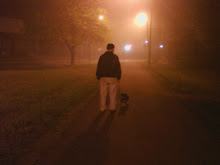
This is my first blog of the new year. Kind of slow, I know, but it has been busy. The first full week of 2011, I officiated at two funerals, one for a ninety-seven year old woman and one for an eighty-seven year old woman. There was a lot of life there to celebrate.
On to the topic at hand.
I don’t know when I first encountered the Statement of Faith of The United Church of Canada. In seminary I think. When I did, I appreciated it deeply, and still do. The phrases are succinct and powerful and they really present a statement of faith. The ending lines come to me from time to time. A well of faith bubbling up. The whispering wind of the Spirit. They have been coming back to me in recent days.
In life, in death, in life beyond death,
God is with us.
We are not alone.
Thanks be to God.
Like many of you, I was horrified by the violence in Tucson over the weekend. The shooting of a congress woman, the death of a nine year old, a gun in the hands of someone whose thought processes were deranged. In life, in death, in life beyond death, God is with us. We are not alone. Thanks be to God.
Over the weekend outside the small town of Cromwell (about 40 miles from Duluth), population about 200, two people were murdered. No suspects are currently in custody. Just the day before our church music director had purchased meat for our staff holiday party from the woman who was killed. The woman worked as a meat cutter at a local meat market. In life, in death, in life beyond death, God is with us. We are not alone. Thanks be to God.
I have had a number of challenging pastoral conversations since the new year began – conversations where there has been hurt, anger, sadness, anxiety, concern about change, concern about relationships, concern about surgery. This in addition to the two families grieving. In life, in death, in life beyond death, God is with us. We are not alone. Thanks be to God.
God is with us. We are not alone. Perhaps this God with us is whispering encouragement for us to be a kinder, gentler people. Perhaps this God with us is whispering encouragement for us to work together with God to create a kinder, gentler world.
With Faith and With Feathers,
David
Tuesday, January 11, 2011

Friday, December 31, 2010
One Year to the Next
As one year flows into the next, I wanted to review some of the memorable quotes I recorded for myself in 2010 and share a few with you (again, perhaps).
If we don’t see ideas as the voice of God in us, how can we hope to know more of God in this world – and in ourselves. Joan Chittister, Living Well
The truth will set you free. But not before it is finished with you. David Foster Wallace
We seem to be forgetting about the soul, about what it is for thought to open out of the soul and connect person to a world in a rich, subtle and complicated manner; about what it is to approach another person as a soul, rather than as a mere useful instrument or an obstacle to one’s own plans; about what it is to talk as someone who has a soul to someone else whom one sees as similarly deep and complex. Martha Nussbaum, Not For Profit: why democracy needs the humanities
The job of the artist is always to deepen the mystery.
Francis Bacon
Thinking one knows it all, thinking one knows something one doesn’t, one miscalculates reality.
Michael Eigen, Madness and Murder
Recently a friend sent an article to me about Judson Phillips, a founder of the Tea Party Movement, who would like to see The United Methodist Church disappear, calling it socialist and Marxist. The change of year is a good time to clear the air, make confessions, free the soul. I confess that I am enamored with Marxian wisdom. I cannot deny the truth Marx spoke when he said:
Outside of a dog, a book is man's best friend. Inside of a dog it's too dark to read. Groucho Marx
Bring the new year in joyfully.
With Faith and With Feathers,
David
Friday, December 24, 2010
Bing and Bowie
November 30, 1977. I was 18 years old and in my first semester of college at the University of Minnesota, Duluth. That night Eric Servareid bid farewell as a regular correspondent on the CBS Evening News with Walter Cronkite. His parting words are worth watching and they can be found on youtube.
That night the Bing Crosby Christmas special aired. Bing had died October 14. One of the most memorable moments that night was the duet between Bing Crosby and David Bowie. There is some kind banter and then a lovely version of “Little Drummer Boy/Peace on Earth.” I posted this link earlier on my Facebook page. The song was taped September 11, 1977 – before September 11 was September 11. Anyway, I think I was watching that show that night, at least that is my memory. I was not a big David Bowie fan at the time, and Bing Crosby was nice, but kind of old school. Nevertheless, I enjoyed the song. It was and is a Christmas music favorite.
I have fond memories of Christmas music. My parents had a few of the Goodyear Greatest Songs of Christmas albums around the house. My wife, Julie, loves Christmas music, as do our daughters Beth and Sarah. I love the songs of the church for the season – especially It Came Upon the Midnight Clear, Little Town of Bethlehem, What Child is This, In the Bleak Midwinter, and Silent Night. I also love many “secular” Christmas songs. In recent years I have burned some of my own “greatest songs of Christmas” and its three CDs contains these songs:
Pachelbel, Canon in D
James Taylor, I’ll Be Home For Christmas
Vince Guaraldi, Christmas Time is Here (vocal)
John Coltrane, My Favorite Things
Johnny Mathis, Do You Hear What I Hear
Paul McCartney, Wonderful Christmas Time
Bing Crosby, White Christmas
Nat King Cole, Christmas Song
Bruce Springsteen, Santa Claus Is Coming To Town
John Lennon, Happy Xmas
Tony Bennett, My Favorite Things
Bing Crosby/David Bowie, Little Drummer Boy/Peace on Earth
Vince Guaraldi, Christmas Time is Here (instrumental)
Louis Armstrong, Wonderful World
Mahalia Jackson, O Holy Night
Judy Garland, Have Yourself a Merry Little Christmas
Julie Andrews, In the Bleak Midwinter
Mormon Tabernacle Choir, Joy to the World
Vince Guaraldi, What Child is This
Sarah McLachlan, What Child is This
Chicago, Winter Wonderland
Diana Krall, I’ll Be Home for Christmas
Sarah McLachlan, Christmas Time is Here
Louis Armstrong, White Christmas
Chicago, Christmas Time is Here
Sarah McLachlan, I’ll Be Home for Christmas
Diana Krall, Christmas Time is Here
James Taylor, River
Diana Krall, Have Yourself a Merry Little Christmas
Sarah McLachlan, River
Louis Armstrong, Christmas Night in Harlem
Sarah McLachlan, Have Yourself Merry Little Christmas
James Taylor, Baby It’s Cold Outside
James Taylor, In the Bleak Midwinter
Sarah McLachlan, In the Bleak Midwinter
Sarah McLachlan, Silent Night
Diana Krall, Sleigh Ride
Dianne Reeves, Carol of the Bells
Rosemary Clooney, Silver Bells
Perry Como, There’s No Place Like Home for the Holidays
Andy Williams, The Most Wonderful Time of the Year
Meredith D’Ambrosia, Christmas Waltz
Mel Torme, Christmas Song
Ella Fitzgerald, O Holy Night
Sheryl Crow, There Is a Star That Shines Tonight
Merry Christmas
With Faith And With Feathers,
David
Friday, December 10, 2010
What Does It Take
This week, an acquaintance of mine, Adam Hamilton, posted a question on his Facebook page and invited responses to it. What are the five most important qualities of pastoral leaders that create or lead vibrant, alive churches? To be honest, I am not sure any short list captures everything that needs to be said here, but it is a question about which I have thought deeply. In short order, I typed out my list and posted it:
• Character/integrity/genuineness/authenticity (o.k. a lot for one quality)
• Deep relationship with God in Jesus
• Vision for ministry
• Passion for ministry – including ministry to the community
• Joy and humor
While I like the list, I did not feel it was quite adequate. I did not think it captured all that I might want to say in response to the question about the important qualities of pastoral leaders leading vibrant and alive churches. I began to play with the idea of intelligences. What sort of intelligences are needed for effective pastoral ministry? I reframed my list in terms of six “intelligences.”
1. Spiritual intelligence (I really don’t like that word here, but, hey, I am trying to work with a theme): has a deep spiritual life, a living relationship with God in Jesus
2. First-rate intelligence. I have long appreciated F. Scott Fitzgerald’s observation: “the test of a first-rate intelligence is the ability to hold two opposed ideas in the mind at the same time, and still retain the ability to function” (“The Crack-Up”). These days we need pastoral leaders who can be comfortable with ambiguity, who exercise imagination, who can help navigate adaptive challenges, who can think theologically.
3. Emotional-Social Intelligence. People skills matter and they were not well represented in my initial list.
4. Vocational Intelligence. We have to be able to do the work, including having some vision for ministry that is intellectually, emotionally and spiritually rooted and compelling.
5. Communication intelligence. Pastors need to be able to communicate orally and in writing, including the use of electronic media.
6. Pedagogical Intelligence. We need to be able to teach.
And if I have something approaching a first-rate intelligence, I know this list will continue to be reshaped.
With Faith And With Feathers,
David
Sunday, December 5, 2010
Francis Bacon Squared
Last week I watched the movie Amazing Grace, a film about the life of William Wilberforce. I thoroughly enjoyed its portrayal of the combination of deep faith and a passion for changing the world. I also appreciated the Francis Bacon quote.
It is a sad fate for a man to die too well-known to everybody else, and still unknown to himself.
I recalled it well-enough from the movie, but wanted to make sure I had it just right, so I typed “Francis Bacon” into a search engine and came up with a number of wonderful Francis Bacon quotes, including the following:
The job of the artist is always to deepen the mystery.
Then I discovered that there is more than one Francis Bacon. The Francis Bacon quoted in Amazing Grace was a British philosopher, person of letters, politician who lived from 1561-1626. The Francis Bacon who wrote about the artist was an Irish painter from the twentieth century. A sample of his work is found below.
While having my Francis Bacon squared this week, I also found my way to a William James essay from 1898, “Philosophical Concepts and Practical Results.” In it James wrote:
Philosophers are after all like poets. They are path-finders. What everyone else can feel, what everyone can know in the bone and marrow of him, they sometimes can find words for and express.
At our best, perhaps pastors are like that, too. We give words to what can be felt and experienced in the bone and marrow of human lives. We point a way forward into a richer life and a deeper experience of self, others, the world, God. We aid the journey of self-discovery, for we, too, consider it tragic that a person should die too well-known to others and unknown to herself. Yet though we put words to experience, serve as path-finders, encourage self-knowledge, we do that within the wondrous mystery that is life as a human being.
James also wrote in his essay, “Philosophers, let them be as queer as they will, still are men in the secret recesses of their hearts.” Queer often means something different than what James meant, and he did not use inclusive language. Taking these into account, I hope what he says here is also true of pastors – be as odd as we will, we are still human in the secret recesses of our hearts.
With Faith And With Feathers (and deep in the mystery),
David

Monday, November 29, 2010
Wild Gratitude
As the Thanksgiving weekend draws to an end, I share with you a fitting poem. It can be found on-line from the site of the Academy of American Poets (poets.org). I have included the link and if you follow it you can hear the poet read his poem.
Wild Gratitude Edward Hirsch
Tonight when I knelt down next to our cat, Zooey,
And put my fingers into her clean cat's mouth,
And rubbed her swollen belly that will never know kittens,
And watched her wriggle onto her side, pawing the air,
And listened to her solemn little squeals of delight,
I was thinking about the poet, Christopher Smart,
Who wanted to kneel down and pray without ceasing
In everyone of the splintered London streets,
And was locked away in the madhouse at St. Luke's
With his sad religious mania, and his wild gratitude,
And his grave prayers for the other lunatics,
And his great love for his speckled cat, Jeoffry.
All day today—August 13, 1983—I remembered how
Christopher Smart blessed this same day in August, 1759,
For its calm bravery and ordinary good conscience.
This was the day that he blessed the Postmaster General
"And all conveyancers of letters" for their warm humanity,
And the gardeners for their private benevolence
And intricate knowledge of the language of flowers,
And the milkmen for their universal human kindness.
This morning I understood that he loved to hear—
As I have heard—the soft clink of milk bottles
On the rickety stairs in the early morning,
And how terrible it must have seemed
When even this small pleasure was denied him.
But it wasn't until tonight when I knelt down
And slipped my hand into Zooey's waggling mouth
That I remembered how he'd called Jeoffry "the servant
Of the Living God duly and daily serving Him,"
And for the first time understood what it meant.
Because it wasn't until I saw my own cat
Whine and roll over on her fluffy back
That I realized how gratefully he had watched
Jeoffry fetch and carry his wooden cork
Across the grass in the wet garden, patiently
Jumping over a high stick, calmly sharpening
His claws on the woodpile, rubbing his nose
Against the nose of another cat, stretching, or
Slowly stalking his traditional enemy, the mouse,
A rodent, "a creature of great personal valour,"
And then dallying so much that his enemy escaped.
And only then did I understand
It is Jeoffry—and every creature like him—
Who can teach us how to praise—purring
In their own language,
Wreathing themselves in the living fire.
Edward Hirsch, "Wild Gratitude" on poets.org
With Faith and With Feathers,
David
Sunday, November 21, 2010
Irony - The Free Ride When You've Already Paid
Whatever happened to Alanis Morrissette? A couple of days ago she was trending on Yahoo, but that lists changes pretty quickly. With the internet, things move rapidly. Information is available at your fingertips. I was trying to remember the date of a Bruce Springsteen concert I attended in 1978, and I found out the dates of his concerts that year within minutes surfing the web. Remarkable. Is there a down side, a dark side? Maybe.
Zadie Smith is a novelist and essayist who is sixteen years younger than me. I share this because her cautionary words about social networking, offered in the most recent issue of The New York Review are not the reflections of a fifty-one year old who could be written off as hopelessly out of touch with a Web 2.0 world (the person writing this blog who also read Smith’s article in a print version of the periodical – yes, I have more subscriptions than apps).
Here are some of Smith’s reflections. Of social media like Facebook, she writes: Connection is the goal. The quality of that connection, the quality of the information that passes through it, the quality of the relationships that connection permits – none of this is important…. a lot of social networking software explicitly encourages people to make weak, superficial connections with each other…. When a human being becomes a set of data on a website like Facebook, he or she is reduced. Everything shrinks. Individual character. Friendships. Language. Sensibility. In a way it’s a transcendent experience: we lose our bodies, our messy feelings, our desires, our fears.Smith is not a Luddite. She raises the issue of the impact of technologies and tools. Tools are wonderful for doing certain things – but do we use our tools or do our tools use us? It is never that simple. Our technologies inevitably shape our sense of self. The question is whether we will give ourselves completely to our Facebook sense of self where relationships are defined by “status,” where we can “like” something or not, where we seem to be our preferences. Malcolm Gladwell, in a recent New Yorker article (yet another subscription) argues that social media are ingenious for developing weak-tie connections which have their strengths. Yet they also have their limits. Other relationships need to be fostered in a rich and full human life. Zadie Smith quotes Jaron Lanier, virtual reality pioneer, “you have to be somebody before you can share yourself.” Developing a somebody may require time off-line, time for quiet reflection, time away from a constantly connected world.
About the time I was thinking about such things, an announcement was made that Facebook would be developing an e-mail system that could link Facebook, e-mail, text messaging in one place. When e-mail arrived, letter writing declined. E-mail is now considered too slow. Who wants to read all that text (who is still reading these words of reflection?). Text messaging is overtaking the human voice of the phone conversation. Pulling all this together in a single site available on smart phones of all kinds, phones that need never be turned off, phones that seem to beg for constant attention lest you miss an update – how might this be changing us, and do we want to be changed in these ways.
Irony. I am posting these thoughts on the web, on a blog linked to my Facebook site. I use the tools and hope they don’t define all that I am.
With Faith and With Feathers,
David
Subscribe to:
Posts (Atom)