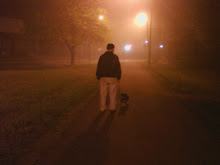
With so many words over so long a time, perhaps passersby can still hear tones inaudible to the more passionate participants. Somebody seems to have hoped so, once.
Adam Gopnik, The New Yorker
Jesus fascinates. That this is so in a culture where “Jesus” has been used for everything
from selling hats and t-shirts to justifying white supremacy is a miracle of no small proportion. Jesus fascinates because of his on-going influence, because of the good that has also been done in his name despite the harmful and the tacky, and because of the literature in which the story of Jesus is told. Beyond that, the literature on the literature is something of a cottage industry. “The appetite for historical study of the New Testament remains a publishing constant and a popular craze” (Adam Gopnik, The New Yorker, May 24, 2010).
Two authors, Gopnik and psychoanalyst Adam Phillips, have both penned thoughtful and engaging articles about Jesus and the Jesus literature this summer. The articles appeared not in arcane theological publications, but in journals of culture. Gopnik’s piece, a review of a wide range of material on Jesus and the gospels appeared in The New Yorker. Phillips work, a review of Elaine Pagels, Beyond Belief in which the writer also engages in deeper religious analysis, was published in the summer edition of The Threepenny Review (published in Berkeley). I am fascinated by their fascination with Jesus, and engaged by their engaging thoughtfulness. While neither author tips their own religious hand explicitly, the impression given by both is that these are articles written by “outsiders,” passersby if you will.
Gopnik is an able judge of current scholarly literature on the historical Jesus. “The current scholarly tone is… realist but pessimistic,” that is to say, the scholars think there are historical materials in the gospels, but getting to the bottom of them is complex. Gopnik thinks this affects faith, or perhaps argues that it should have an impact on faith. “The intractable complexities of fact produce the inevitable ambiguities of faith.” Among the things that reasonably could be said about Jesus, Gopnik includes the following: He’s verbally spry and even a little bit shifty. He likes defiant, enigmatic paradoxes and pregnant parables that never quite close, perhaps by design…. Jesus’ morality has a brash, sidewise indifference to conventional ideas of goodness. His pet style blends the epigrammatic with the enigmatic…. There is a wild gaiety about Jesus’ moral teachings that still leaps off the page. Gopnik writes about Jesus’ “social radicalism” – the relaxed egalitarianism of the open road and the open table. Yet he also acknowledges another dimension to Jesus. In Mark, Jesus is both a fierce apocalyptic prophet… and a wise philosophical teacher who professes love for his neighbor and supplies advice for living. There is a “twoness” about Jesus, including a twoness between what Gopnik calls “Paul’s divine Christ” and “Jesus the wise rabbi.”
Here Gopnik offers additional reflections of his own, distinguishing between “storytelling truths” and “statement making truths.” The twoness in the Christian story is a part of its dynamism, Gopnik thinks. From the very beginning there is ambiguity and symbolism. The sublime symbolic turn – or the retreat to metaphor… begins with the first words of the faith…. The argument is the reality, and the absence of certainty the certainty. Jesus fascinates Gopnik because he continues to offer the possibility for this kind of deep conversation. Somehow in asking about Jesus, we dig more deeply into life.
Adam Phillips offers more than a book review, as already noted. He characterizes Elaine Pagels’ work as “trying to find, within the multiple faiths called Christianity, a version of Christianity that she can morally afford to believe in.” Like Gopnik, Phillips sees within Christianity a certain multiplicity. Phillips argues that Pagels is trying to find a Christian faith that does not demonize the enemy “even if the enemy is what you still need to call them.” Pagels search for such a Christianity has centered in gaining deeper understanding of and insight into the earlier years of the Christian faith. She has studied the writings of the Gnostics, and Beyond Belief focuses on the non-canonical “Gospel of Thomas.” She offers a sympathetic view of the rise of orthodoxy and canonicity. This act of choice… leads us back to the problem that orthodoxy was invented to solve: how can we tell truth from lies. What is genuine and thus connects us with one another and with reality, and what is shallow, self-serving, or evil? Anyone who has seen foolishness, sentimentality, delusion, and murderous rage disguised as God’s truth knows there is no easy answer to the problem that the ancients called discernment of spirits. Phillips then offers his reflections on this passage from Pagels. For Pagels, it is to our (defining) credit that there is no easy answer to the problem of discernment of spirits, and she suggests that our hardest and best task is to keep the problem alive. Orthodoxy robs us of our doubts, and it is only self-doubt that keeps us from demonizing our enemies. He believes that Pagels finds in The Gospel of Thomas a Jesus “who is on the side of the seekers rather than the finders… who prefers being sympathetic to being right.” Phillips wraps up his reflections on Pagels, Christian faith and Jesus with these words: For Christians like Pagels… Jesus invites us to reinvent Christianity, not establish it. He is the visionary who calls for revision. Like a contemporary pragmatist, he doesn’t want to be followed, he wants to be redescribed…. There are as many Jesuses as there are gospels – as there are Christians. All Pagel’s Christians have in common is a quest in which they must try and find what they are looking for.
Agreeing completely with either Gopnik or Phillips is not the point. I am fascinated by their fascination with Jesus, and fascinated by the Jesus they find fascinating. This Jesus, with his fondness for enigmatic paradoxes and pregnant parables that never quite close, with his invitation to a belief that also includes doubts and questions, casts a certain spell (the root of the word “fascination” is in a Latin word that means casting a spell). I am charmed. Parker Palmer writes, “truth is an eternal conversation about things that matter, conducted with passion and discipline.” Perhaps at the heart of Christianity is an eternal conversation about the meaning of Jesus conducted with passion and discipline. If so, Gopnik and Phillips sound tones, sometimes inaudible to some who have been engaged in the conversation a long time, that nevertheless need to be heard. Fascinating.
With Faith and With Feathers,
David
Wednesday, July 21, 2010

Tuesday, July 13, 2010
A Prayer Rediscovered
I had not thought about this prayer for awhile, but today in an e-mail box someone responded to it. This prayer is something I posted on a liturgy web site almost three years ago. I had forgotten it since, but was pleased to be reminded of it. It is a prayer inspired by the well-known “Serenity Prayer” composed by theologian Reinhold Niebuhr.
God - whose love envelopes each of us, whose passion for justice and kindness challenges us, whose care for all life inspires us - give us grace. May your Spirit dance delightfully through our lives. In grace, give us peace in the face of things that cannot be changed - our genetic make-up, our genealogy, past hurts and mistakes. In grace, give us courage to change what should be changed - our unloving attitudes, our narrow perspectives, our cynical hearts, injustice, our too easy resort to violence. In grace, give us wisdom so that we can distinguish between those things that cannot be changed and those that can and should be so that we don't spend needless energy in the wrong direction. In Christ, who changes lives. Amen.
With Faith and With Feathers,
David
Tuesday, June 29, 2010
Gifts
I turned 51 last week (Thursday). The day itself might be among my least memorable birthdays. I was in the Chicago area for a meeting of the United Methodist Church’s University Senate, for which I serve on the Commission on Theological Education. We met in the morning, and that was just fine. I enjoy the people I have come to know in this work. We even got done a little early, so I was at O’Hare early for my flight. When I arrived, the check in screen told me that my flight was overbooked and to see the agent if I might be willing to change my plans. Well, there were three other flights to Minneapolis scheduled to leave O’Hare before mine, so I thought I would graciously volunteer to get on an earlier flight. No such luck. The airport was crowded and busy as the day before weather led to flight delays and cancellations. I would have to wait until my scheduled flight left – so on my birthday I spent six hours in a crowded airport. I enjoyed the reading time, but otherwise not a terribly memorable birthday.
The next day, however, I was greeted on Facebook by a number of good wishes for my birthday. I am deeply appreciative of each one, and find myself pledging to do better at checking for others’ birthdays on the site. Each greeting was a gift.
I got to thinking a bit about gifts, and about all the gifts in my life. It seems to me that the essence of a gift is that it is something received for which the language of “deserve” does not apply, or doesn’t apply easily or well. I am the grateful recipient of many gifts in life:
Love – God’s love. The essence of God’s gracious love is that it is not about “deserving.”
A good marriage. Yes, there is work to be done in creating a good marriage, and I hope I have done some of that work, but there is also a quality of gift about being in such a relationship.
Children who are doing well. Again, one hopes they contributes to the well-being of their children. Again, I hope I have given something positive to my children which has helped make them who they are. And again, there is a quality of gift when your children are healthy and relatively happy and you have a good relationship with them.
Friends.
Small joys: a good book, a baseball game, music (and this summer seems particularly rich with some good new music – The New Pornographers, The Court Yard Hounds, The Hold Steady – all previously mentioned; and more recently Teenage Fanclub’s new cd and Bruce Springsteen’s concert dvd), a walk.
With all these good gifts of life, who can complain about a day at the airport.
With Faith and With Feathers,
David
Saturday, June 19, 2010
Summer Music
A couple of weeks ago, I decided to burn a CD with some new music for this summer, most of it on recordings released this year. I am enjoying the music and wanted to share my summer CD with you.
Skyline, The Court Yard Hounds. The Court Yard Hounds are two-thirds of the Dixie Chicks – sisters Emily Robison and Martie Maguire. This is the first song on their CD and it is a song about finding peace and home. “I just look at the skyline/A million lights/are lookin’ back at me/And when they shine/I see a place I know I’ll find/some peace.”
Then Again, The Court Yard Hounds. Favorite line: “But then again, I never did understand me.” A song about the mysteries of the self and searching for deeper self-understanding.
Mass Romantic, The New Pornographers. The name of this group has disputed origins. One band member claims he named the group after watching a Japanese film. Some think the name comes from statements made by Jimmy Swaggart or John Ashcroft (or both) that rock and roll is “the new pornography.” In any event, this group makes good music and they released a new CD this summer. The song mentioned here is not from that CD, but from their first CD. “In the streetlight dawn, this beat turns on.” And it does.
Crash Years, The New Pornographers. This song and the next are from the group’s 2010 release, “Together.” “Light a candle’s end/You are a light turned low/And like the rest of us/You got those old eternity blues.”
Up in the Dark, The New Pornographers. “What’s love?/What turns up in the dark?” Good questions, catchy tune.
My favorite CD this summer thus far has been “Heaven is Whenever” by The Hold Steady. My summer CD finishes with six songs off this CD.
The Sweet Part of the City, The Hold Steady. “Back when we were living up on Hennepin…. We were living in. The sweet part of the city.” Turns out one of the band’s founders is from Minneapolis, where Hennepin Avenue is located.
Soft in the Center, The Hold Steady. “You can’t tell people what they want to hear if you also want to tell the truth…. You can’t get every girl. You’ll get the one’s you love the best. You won’t get every girl. You’ll love the ones you get the best.”
The Weekender, The Hold Steady. “But it’s not gonna be like in romantic comedies. In the end I bet no one learns a lesson.”
We Can Get Together, The Hold Steady. “They sang Love is the Answer. I think they’re probably right. Let it shine down on us all.” “Heaven is whenever we can get together. Sit down on your floor. And listen to your records.”
Hurricane J, The Hold Steady. Great song, catchy. “I don’t want this to stop. I want you to know. I don’t want you to settle. I want you to grow.”
Our Whole Lives, The Hold Steady. “We’re good guys but we can’t be good every night. We’re good guys, but we can’t be good our whole lives.” They may be wrong, but it still sounds great.
With Faith and With Feathers,
David
Saturday, June 5, 2010
Annual Conference
I was not looking forward to attending the meeting of The Minnesota Annual Conference this year (from which I returned yesterday). Let me be clear, however. I was also not not looking forward to it. The time just arrived and I had not given attending annual conference a lot of psychic energy. Anticipating something you are looking forward to can be a part of the joy of an event. It can also sometimes lead to disappointment when what you are anticipating does not meet your expectations. For whatever reason, and primarily it was because of the busyness of May, I had not invested energy in anticipating annual conference (which, for those of you who may not know, is the annual gathering of clergy and a lay people from United Methodist churches across the state of Minnesota).
Given that I had not spent time in anticipation, I can’t say that annual conference met my expectations. I can say that it was filled with joy. The trip down with Dale, our church’s lay member, was nice. Dale is not only a church member, he is a friend whose insights and opinions I value. After arriving I began seeing friends, clergy and lay, from across the state, some of whom I see only once a year. While I had not spent time this year anticipating conference, I began to see why I usually look forward to it. It is the people – the hugs, the smiles, the “how are you?s” It is also the opportunity to gather with a unique church community to worship and learn. There were countless moments of grace and joy in the three days we gathered – conversations, meals, worship, helping with ordination, working with the bishop as her parliamentarian.
While I was gone, however, I missed my daughter’s last three days of high school. Her commencement is this coming week and of course I will be there for that. It is difficult to believe that our youngest child has now finished high school and will be off to college in the fall. This morning she let me look at her year book. I asked if she minded my reading what people wrote about her, and she said “no.” What a delight to read such nice things about your daughter. As I was reading, I thought to myself, “Wouldn’t it be great if there were some adult ritual that took place every few years where your friends could write nice things about you and wish you well in life?”
Then it struck me. One of the things I really appreciate at annual conference is that we gather to see and hug friends who are glad to see us, who ask us how we are, and who wish us well in the coming year - - - kind of like signing a year book. I am already looking forward to next year’s conference.
With Faith and With Feathers,
David
Friday, May 28, 2010
Religions 1910-2010
The May/June issue of New World Outlook, the mission magazine of The United Methodist Church, had a fascinating brief article comparing religious affiliation around the world in 1910 and 2010. In that one hundred year period, the percentage of the world’s population that proclaims they are Christian has remained about the same 34.8% in 1910 compared to 33.2% in 2010. I know from other sources that there has been a shift in where Christians are to be found, but the relative number of Christians has remained about the same. Islam, on the other hand, has grown tremendously as a percentage of the world’s population in the past one hundred years, from 12.6% in 1910 to 22.4% in 2010. I know some people who seem to equate numerical growth with what God is “blessing” in the world. By that thinking, Islam would seem to be the religion God is blessing most. To my mind, such thinking represents neither good theology nor good sociology. As a pastor, I pay attention to numbers. They matter, but I also know that the factors that influence one’s religious journey are complex. We need a more complex theology, sociology and psychology to dig more deeply into why people become religious adherents and stay or leave their respective religion. What seems even more ironic, for those who might claim in some simple way that numbers represent what God is blessing, by sheer exponential mathematics, the group that has grown the most is agnostics. Just .2% of the population in 1910, they are now 9.3% of the population – 46.5 times as many agnostics in 2010 as in 1910!
But those numbers are not what grabbed my attention most. Notice from the above figures that between Christianity (33.2%) and Islam (22.4%), over half of human kind considers itself either Christian or Muslim. So why is our world such a mess? Why so much war, such deep injustice? Why so many hungry and homeless? Some Christians may say that we are only a third of the population, and if only we grew the world would be better. Some Muslims might say something similar about Islam. Rather than compete with each other, though, might we do better to find those parts of our respective traditions which encourage mutual respect (even while offering witness to our own faith), which enjoin us to build a better world with whomever might join us on this journey? If we fail to do this, we may find the number of agnostics growing even more in the next one hundred years.
With Faith and With Feathers,
David
Saturday, May 22, 2010
Poetry
Railroad tracks split the campus in half
and at night you’d lie on your narrow cot
and listen to the lonely whistle
of a train crossing the prairie in the dark.
“The Beginning of Poetry” Edward Hirsch, The Living Fire
It is difficult
to get the news from poems
yet men die miserably every day
for lack
of what is found there.
From “Asphodel, that Greeny Flower” William Carlos Williams
In the first two weeks of May I attended two poetry readings – one given by Robert Bly and the other a joint reading offered by Minnesota poets Connie Wanek and Joyce Sutphen. That I was free both these evenings was something of a miracle. That I could attend these readings was a gift of grace.
I first fell in love with poetry in high school. Words seem to have a certain power, a certain magic and when put together rhythmically and beautifully they plunged deep into my soul. My love affair with poetry waxed and waned over the years, but became intense again as I worked on my doctorate. The PBS series, Voices and Visions came out during that time, and watching it, hearing poems read – Wallace Stevens, Elizabeth Bishop, others - rekindled a deeper passion that has stayed lit since. Reading poetry has feed my soul, sparked my imagination, ignited my mind, set my heart to dancing. Reading poetry has helped me enormously in my reading of the Bible which is filled with so much poetic language. The brevity of parables has a poetic quality.
And so I read. And so I listen.
To live without rotting from within,
to ignore imperfections of the skin,
to be heavy, and still be chosen,
to please a strict vegetarian,
to end the day full of light.
From “Pumpkin” Connie Wanek, On Speaking Terms
What you wanted was no less than the truth,
something you could hold lightly in your hand.
What you found was this uncertainty,
memory mixed with desire. How we live.
From “How We Live” Joyce Sutphen, First Words
And so I read. And so I listen. And I am changed.
Rene Char
you are a poet who believes
in the power of beauty
to right all wrongs,
I believe it also.
With invention and courage
we shall surpass
the pitiful dumb beasts,
let all men believe it
as you have taught me also
to believe it.
From “To a Dog Injured In the Street” William Carlos Williams, Pictures from Brueghel
Beauty and grace are performed whether or not we will or sense them. The least we can do is try to be there.
Annie Dillard, Pilgrim at Tinker Creek
Poetry helps me be there.
And the Word became flesh… full of grace and truth. And the grace and truth that became flesh can become word again, often in the words of poets.
With Faith and With Feathers,
David
Subscribe to:
Posts (Atom)